
Turbulence: Jamais Vu review: simulating vestibular migraines

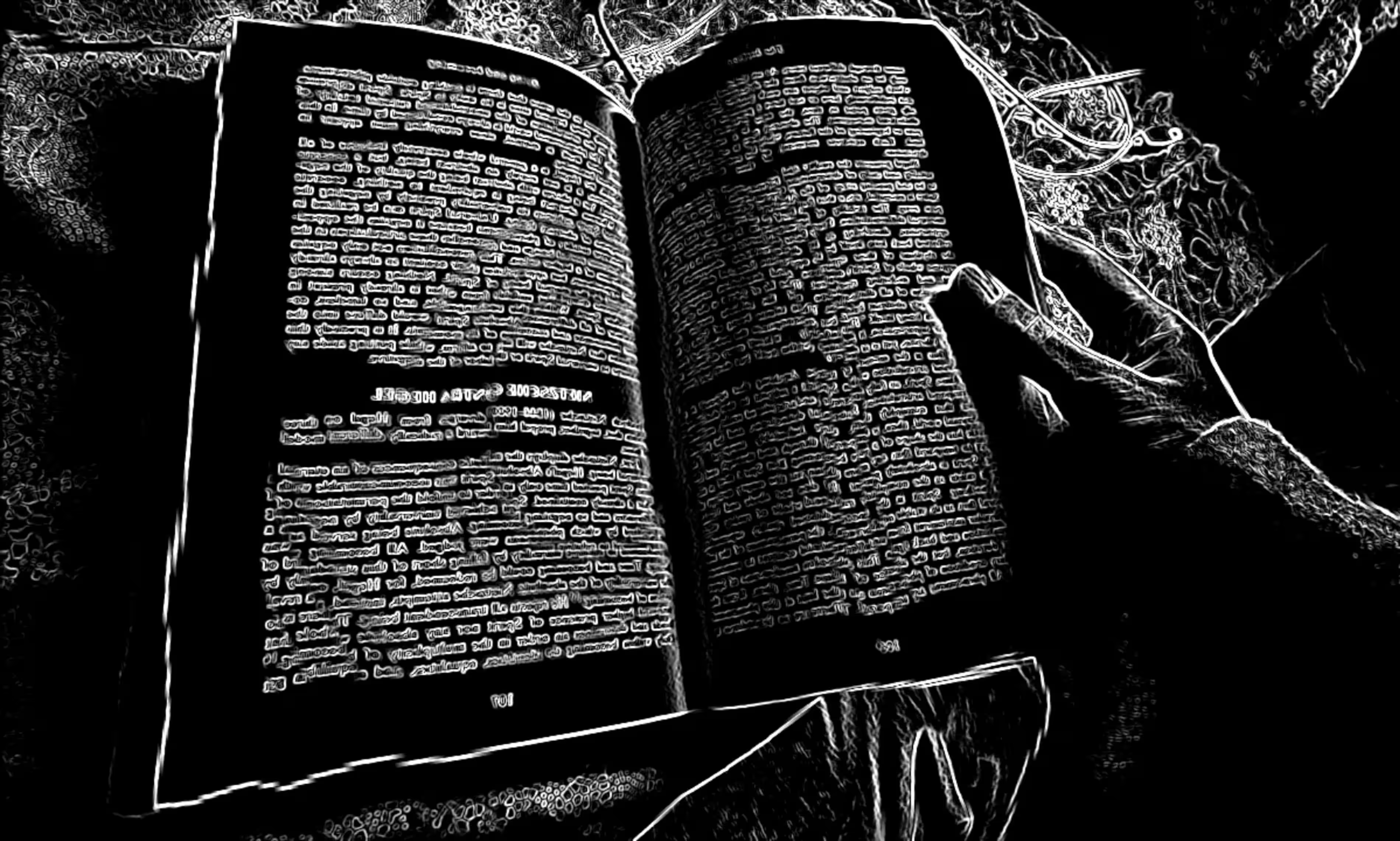

You would’ve heard of deja vu: the surreal sensation of having previously experienced the present, or something like it. You may not have heard of jamais vu: the sensation of being unfamiliar with things that should be recognisable—like your house, your desk, even your hands. Guy Pearce’s protagonist in Christopher Nolan’s 2000 thriller Memento, who can’t create new memories, has a version of it. But the kind I got a taste of, in this mixed reality experience directed by Ben Joseph Andrews and Emma Roberts, is jamais vu of a very different variety.
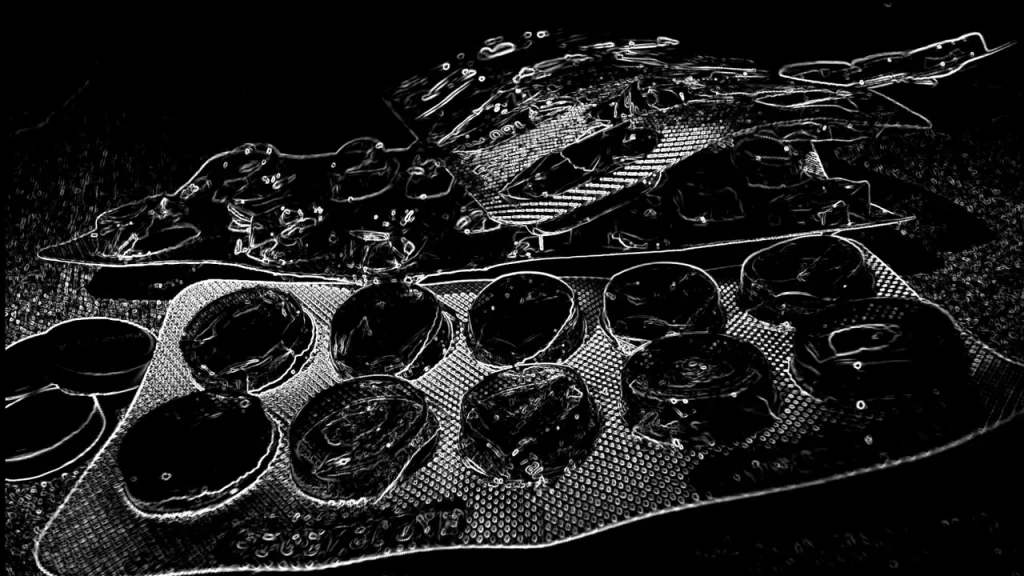
Turbulence: Jamais Vu aspires to simulate a chronic vestibular condition experienced by Andrews. The 32-year-old was first diagnosed with the condition, which causes severe migraines and dizziness, in his mid-20s. He and Roberts brought the experience, which premiered at the 2023 Melbourne International Film Festival, into my home the week before the festival kicked off. Preparing it involved placing particular objects on my dining table, such as a book, a coffee cup, a notepad and a plastic container filled with pills (which were actually Tic Tacs).
Creators: Ben Joseph Andrews, Emma Roberts
Release date: December 10, 2020
Experienced on: Modified Quest 2
Andrews told me that vestibular migraines “are not well known in the migraine family,” making the path to diagnosis long and fraught. He also told me that “with this condition, there’s no such thing as stillness. Even the pulse in your body has movement. Even just closing my eyes is another intense form of movement…part of it (Turbulence: Jamais Vu) involves looking at what that enables and offers. It’s an attempt to create a language to illustrate something that’s very tough to describe.”
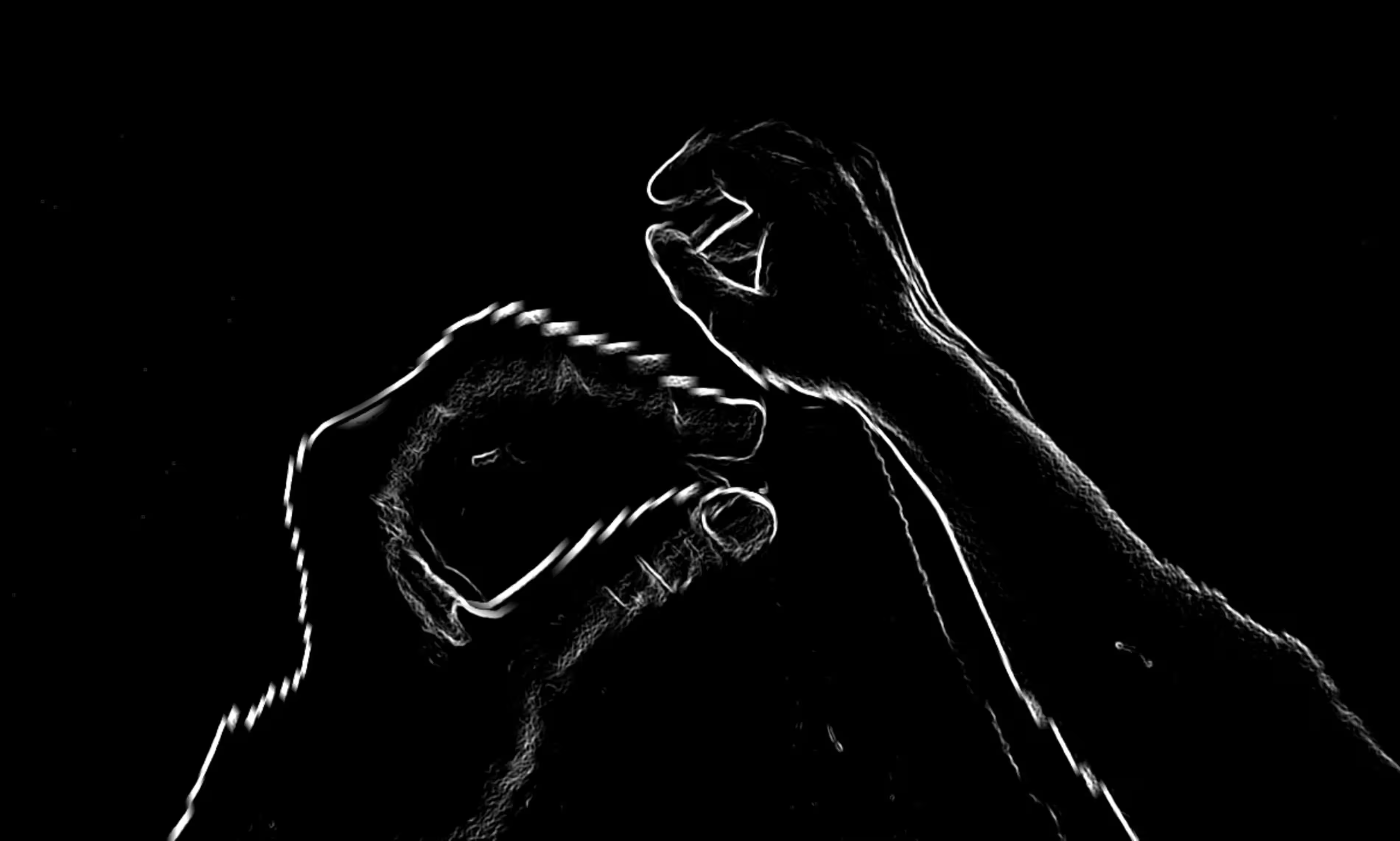
When I put on their Quest 2 headset, modified with a depth camera attached to it, the environment around me changed in surreal ways. I was in the same room but could no longer see in colour: everything turned into charcoal monochrome. The outline of objects looked blurry and weird. The space before me had been inverted, so when I moved my right hand I saw it move on my left. My sensory system had been thrown out of whack. At one point, Andrews asked me via voice-over (part of the experience) to retrieve some aspirin from a container and place the pills in a mug. This seemingly simple request was immensely difficult and required intense concentration. They made the familiar unfamiliar…they made jamais vu.
The highly experiential and intimate nature of virtual and mixed realities allow creators to explore subjects such as this like no other art forms. We’re not reading about vestibular migraines or listening to interviews: we’re immersed in a simulation that fundamentally changes our sensory information. This is why VR and MR have a history in exploring conditions such as autism, gender dysphoria, panic disorders and many more.
Some of this content is scalable, coming in the form of apps that can be added to stores or distribution platforms via the usual processes. Others, like Turbulence: Jamais Vu, function more like art installation projects, requiring the preparation of special elements that aren’t easily replicable. Usually these elements are tied to physical world properties. For instance in Lynette Wallworth’s psychedelic experience Awavena, which I experienced at the Australian Centre for the Moving Image, I began by sitting on a swing. Later I was given a backpack by a staffer and assisted into an adjacent room, where I physically walked through a virtual forest, the space around me mapped to the experience.
Turbulence: Jamais Vu isn’t scalable, at least at the time of publishing, for reasons such as the aforementioned depth camera. This is essentially a way of hacking the device so it can perform functions prohibited by Meta, i.e. the inverted images and intensely stylised monochrome passthrough. In some ways the lack of scalability makes it more special, comparable exhibition-wise to the ephemerality of theatre: art that isn’t for the masses, and exists for the moment. I respect Andrews and Roberts for finding ways to circumvent the rules to create a work of art that’s distinct, unusually evocative, and reflective of different aspects of human experience.
This is an edited version of a story that was first published on The Guardian.