
The World Came Flooding In review (Melbourne Int. Film Festival)


Great storytelling in virtual reality involves using space to reveal information. There’s always an interplay between narrative and locations: places tell stories, and stories belong to places. Objects of course belong to places too, and in video games and VR experiences it’s the objects of obvious significance we tend to pay special attention to—like puzzles to complete, batteries to replace, or a map to consult.
But it’s entirely prosaic, ordinary objects that become rich sources of narrative information in the 25-ish minute documentary experience The World Came Flooding In. The production, which I checked out a week before its world premiere at this year’s Melbourne International Film Festival, reminded me of a Bob Dylan lyric: “The things you have the hardest time parting with are the things you need the least.”
Directors: Isobel Knowles and Van Sowerwin
Premiere date: August 21, 2025
Venue: Melbourne International Film Festival
Experienced on: Meta Quest 3
Directors Isobel Knowles and Van Sowerwine do a fine job creating a space that encourages us to reflect on the value of possessions, and what they mean for people who’ve persevered through natural disasters. It revolves around three real-life subjects—Marina, Antoinette and Tom—who live thousands of kilometres apart, but are united in the sense they’ve all survived major floods.
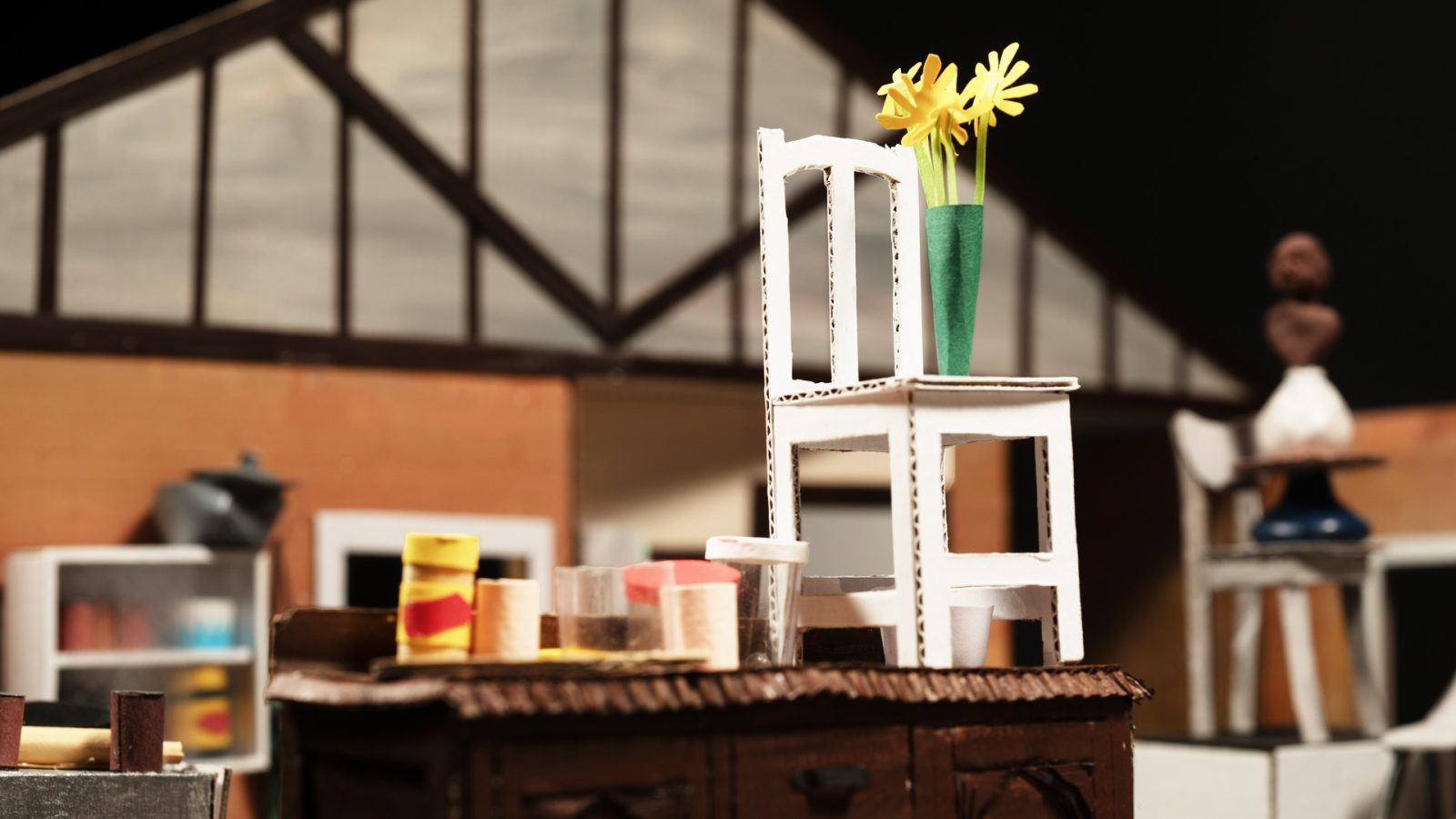
The experience’s focus on objects gives their melancholic stories tangible, literal qualities. The objects and settings in The World Came Flooding were rendered via an unusual production process—first recreated in miniature, using materials such as paper and cardboard, then scanned into VR via a process called photogrammetry. What we see and touch are representations of representations, somewhat like memory: the original event or artifact morphs in our minds, taking on different colours and contours as we remember not just what it was but also how it made us think and feel, our thoughts and emotions inevitably changing over time.
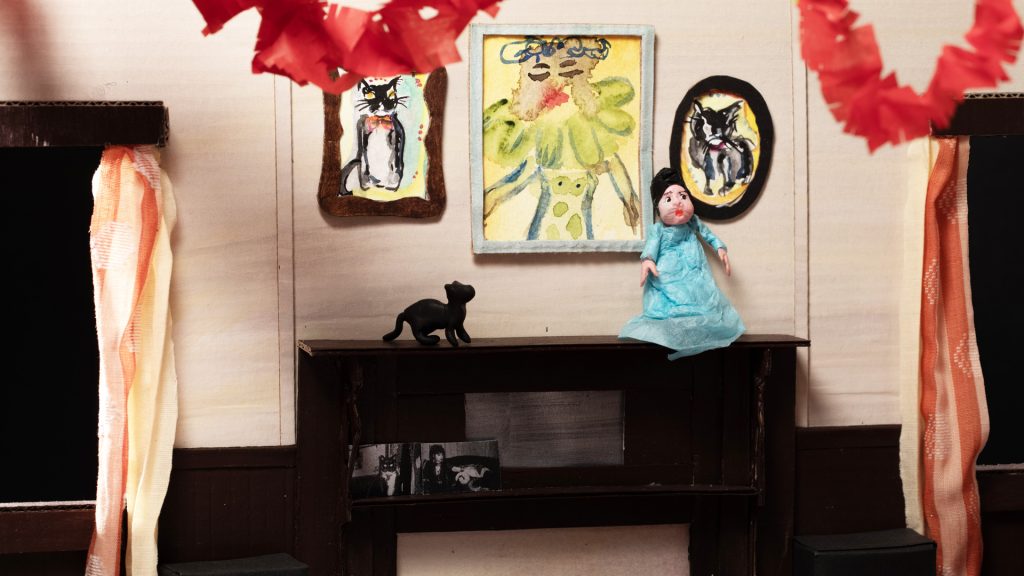
Many developers of interactive VR experiences bite off more than they can chew when they attempt to recreate the world around us, via photorealistic environments. The technology is not at a point where it can convince people they’re experiencing the “real” world; it’s often better, as Knowles and Sowerwine demonstrate, to embrace a more otherworldly aesthetic, somewhere between real and actual, emphasizing emotional truth.
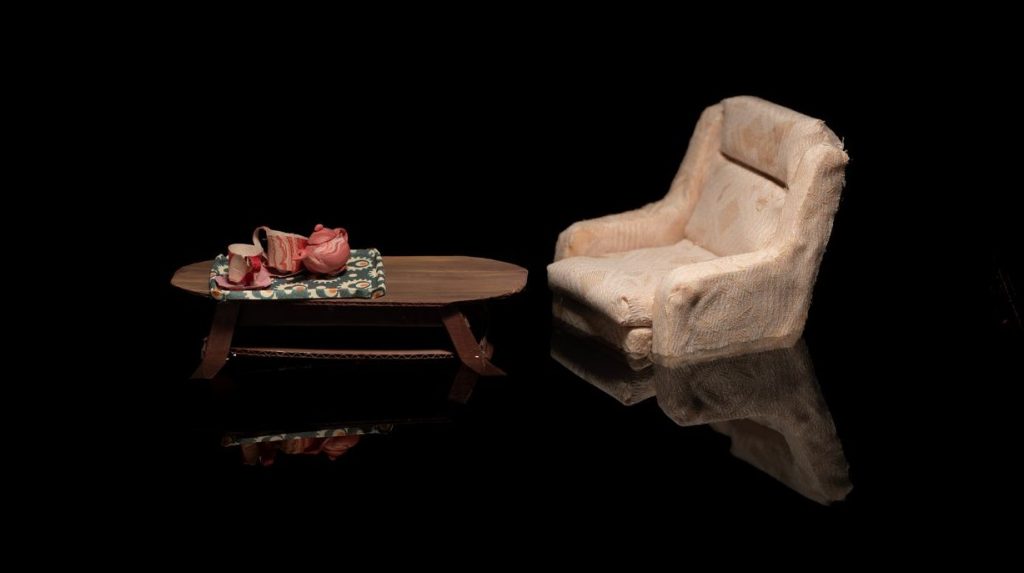
In The World Came Flooding In we explore three different homes, one for each subject, and two bookend environments in darkened tableaus, where particular objects have been isolated—now existing outside space and time. About halfway through the experience, we’re inside Marina’s living room listening to her reflect on how “a lot of things were wrecked, but my best books were saved because my dad always said, ‘anything that’s precious, Mina, you have to put on a high shelf.’”
It’s a lovely, melancholic line, the shelf of course being literal but also signifying a treasured, sacred space. It also touches on the power of forces beyond our control to destabilize our lives, which is reiterated throughout the experience by the surreal sight of a “rain that never ends.” Floods often represent seismic change: a profound state of upheaval, ushering in a new state of being. The World Came Flooding In taps into this, but also looks back—using those beautiful, slightly scrappy looking objects as memory triggers.