
Crafting Crimes review: sordid stories, elegantly told

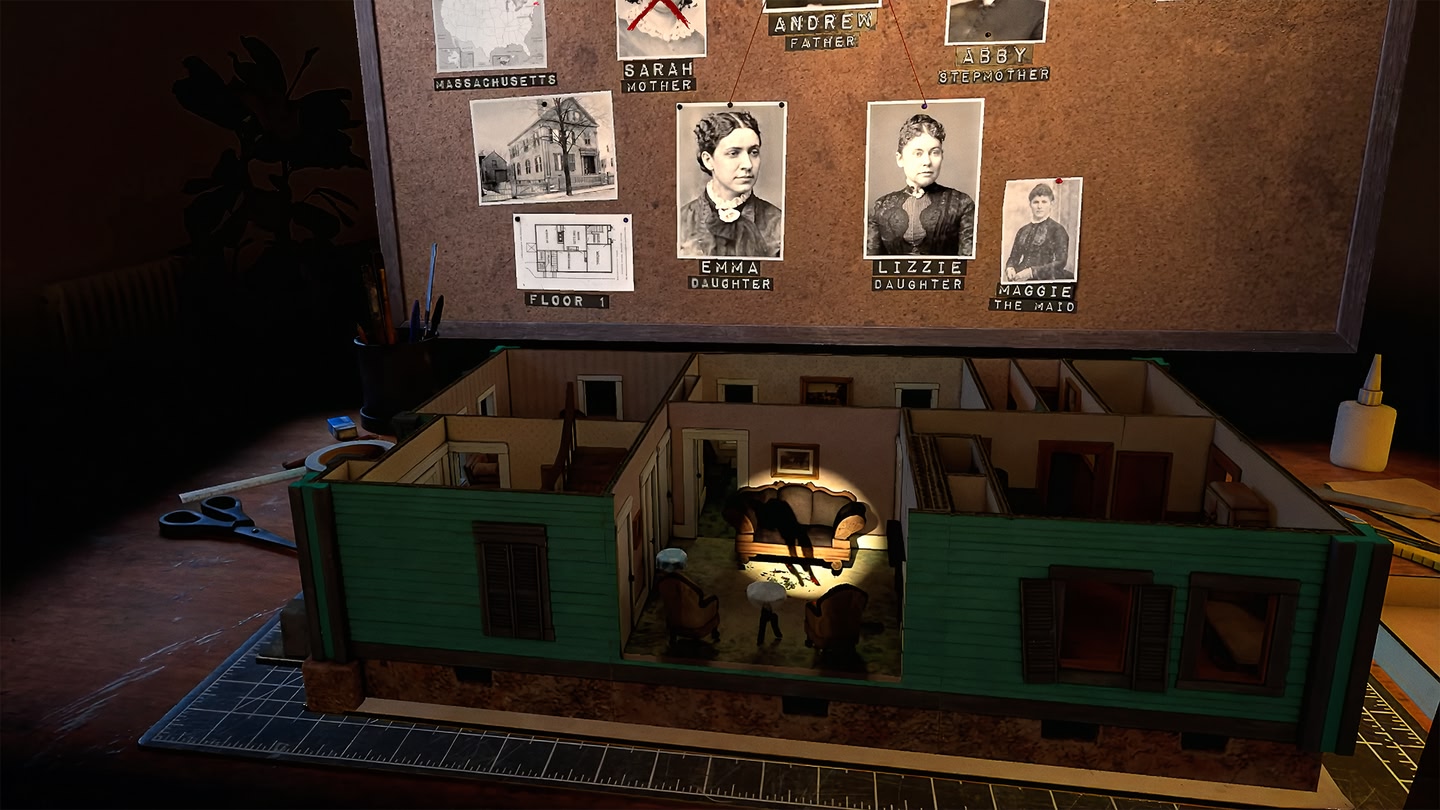

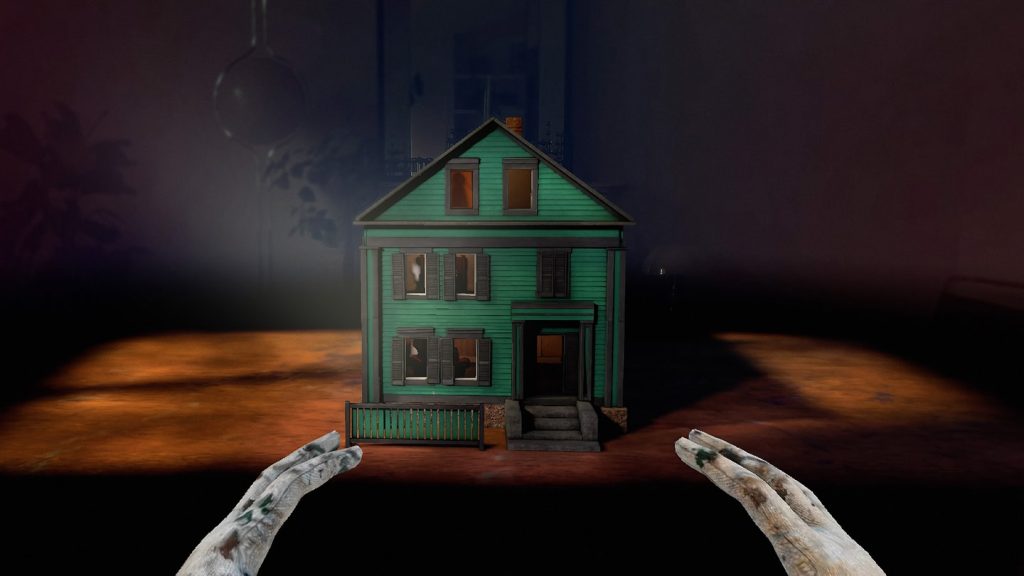
Reconstructing murder scenes using dollhouse-like miniatures feels, to me, a rather paradoxical recreation—merging childhood playtime with the most adult of realities. This very niche and strange hobby is central to Crafting Crimes, a hybrid mixed-reality and documentary experience presented by Carol K. Ras, a podcaster, filmmaker, and self-professed “storyteller with a miniature twist,” who guides the viewer through an experience in which—according to Meta’s official description—“you don’t just listen to the story—you build it.”
This overstates Crafting Crime’s light, place-and-drop interactivity but does encapsulate some of its hands-on spirit. The experience is divided into roughly 20 minute episodes, with, at the time of publishing, one available, unpacking the famously unsolved case of the deaths of Andrew Borden and his wife, Abby, who were killed by an axe murderer in their Massachusetts home in 1892. Their daughter and stepdaughter respectively, Lizzie Borden, was arrested, tried, and acquitted in a case that became a media sensation.
Developer: TARGO
Release date: October 1, 2025
Available on: Meta Quest 3
Experienced on: Meta Quest 3
Crafting Crimes opens with a short segment presented in crisp 3D video, in which Ras introduces herself and establishes basic details of the case, noting, for instance, that Andrew Borden was a Scrooge-like businessman—loaded but frugal. His property had a “strained household dynamic.” Andrew and Abby shared the same roof as Lizzie and her sister Emma but lived very separate lives, the latter reportedly desiring somewhere more befitting of their wealth; somewhere with actual plumbing.
Before revealing much more, Ras addresses the audience (“Let’s get you started!”) and a desk appears in front of us with a floor plan of the Borden house. Behind the desk is a corkboard with various photographs pinned to it; to our right are small models of the downstairs rooms, which we pick up and place onto their respective spots on the floor plan. This simple action is wedded to a narrative purpose, each placement triggering more information from Ras’s voice-over. “The two daughters rarely ate with their father and stepmother,” she says when we drop the dining room into its correct position.
A consequence of this gamification was, for me, a desire to hurry through the process and progress—but it’s better to slow down and let the dialogue play out. The crimes are sordid, but the production itself is a class act, well-paced and elegantly directed by Chloé Rochereuil, whose oeuvre includes the experiential doco JFK Memento: A Chronicle of the Assassination, which pulls off the difficult feat of bringing freshness and ingenuity to a subject as well-flogged as the JFK assassination.
When we place all the rooms, we discover there’s one missing: the sitting room, a.k.a. the scene of the crime—or at least one of them. This place-and-drop process is repeated with the upstairs level, where the second murder—of Abby—transpired. On both levels, we sort of see, and sort of don’t, recreations of the murders, the killer and their victims presented as silhouettes. This stylistic decision allows us to keep track of where they’re located—spatial positioning being crucial to this experience—while the full gore and grisly details play out only in the mind’s eye.
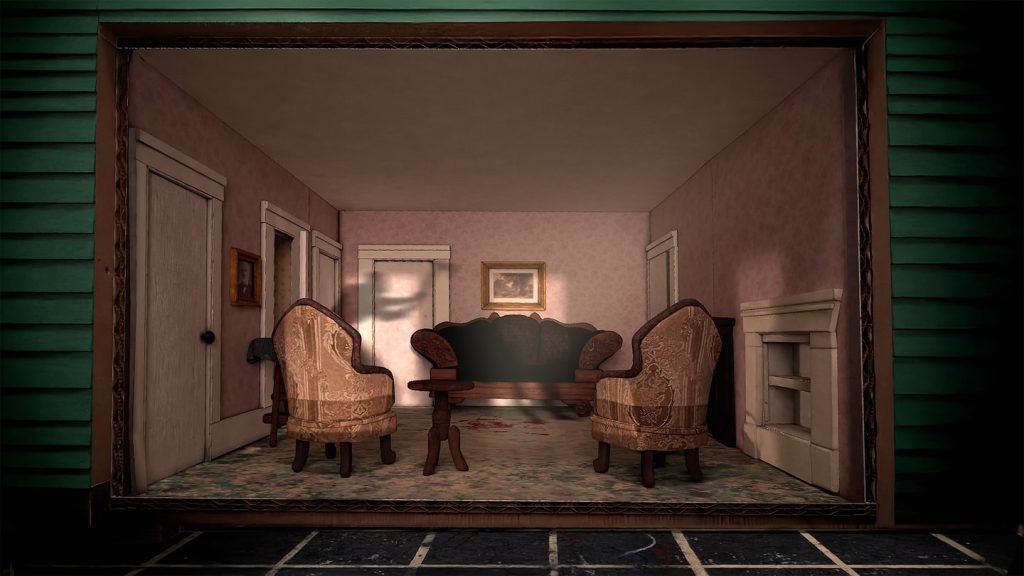
We watch rather than interact with the rest of it, with Ras offering a blow-by-blow account of the day—at least in terms of established facts. We see the house, and its rooms, in different scales and perspectives as the story unfolds. The location feels, perhaps inevitably, rather empty, devoid of human activity other than through sounds and those well-placed shadows. It’s a shame that Crafting Crimes doesn’t use scans of Ras’ actual miniatures; it reminded me of the experiential documentary The World Came Flooding In, which used a process called photogrammetry to bring into VR objects and settings first created using materials such as paper and cardboard.
But that’s a minor gripe. I was engaged throughout, and at no point does the central, dollhouse-ish novelty wear off. Having pieced together the house using our own hands makes us feel more invested in the setting and, by turn, the story. Like The World Came Flooding In, central to Crafting Crimes is an understanding that places tell stories, and stories belong to places—these ones being particularly grim.