
Hotel Infinity review: mind-bending corridors, hollow exploration

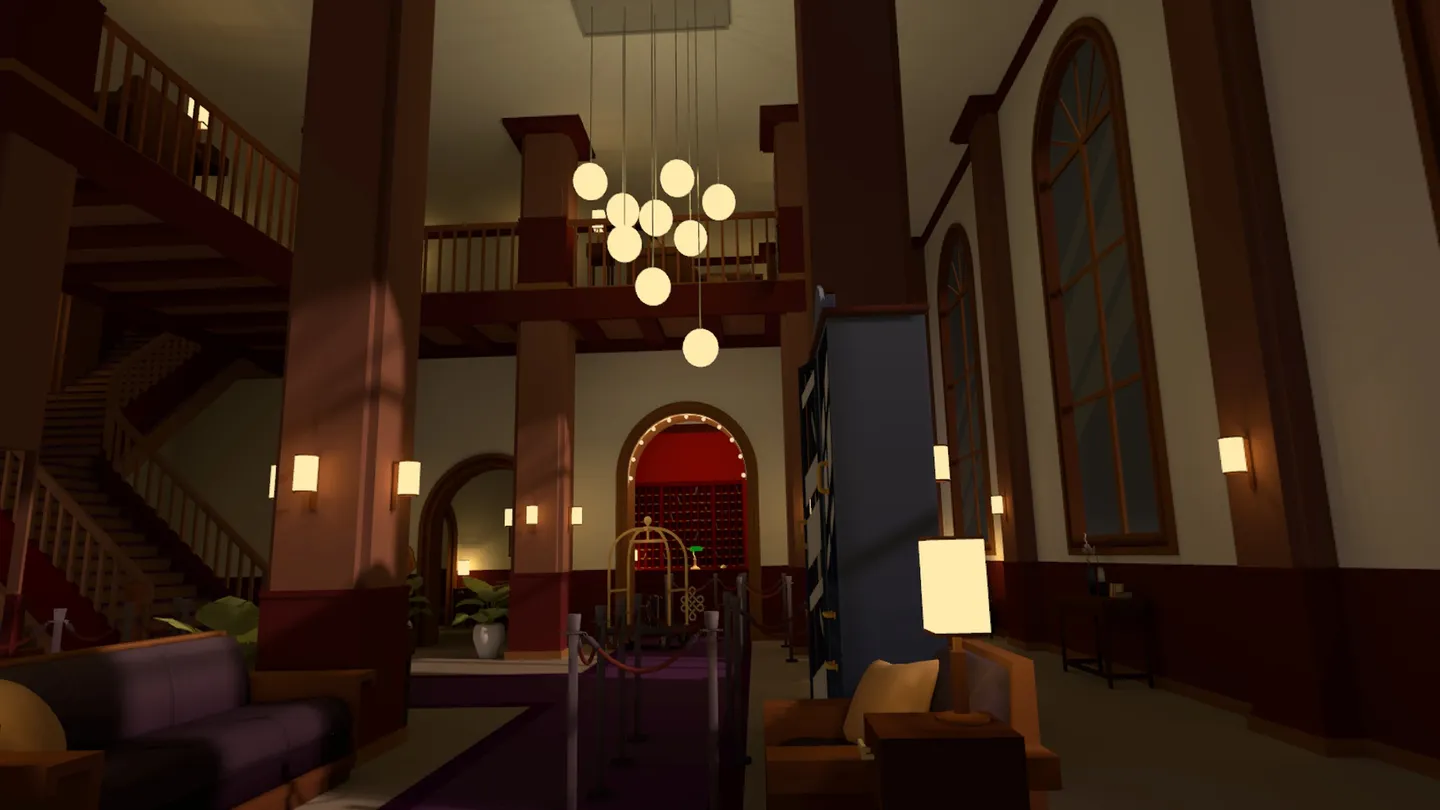

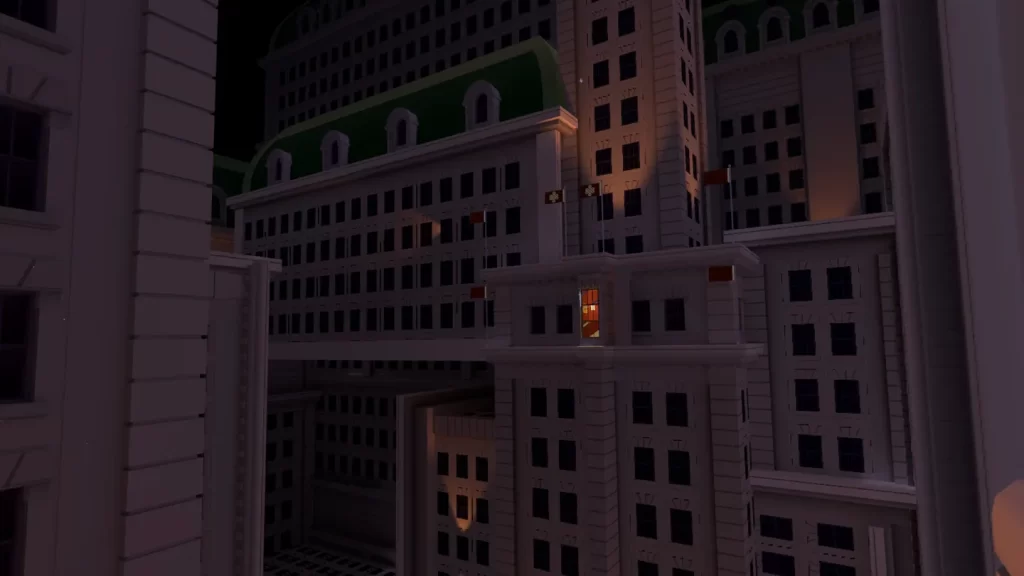
The titular location in Hotel Infinity is extremely warped and surreal: a labyrinth of spaces connected in impossible ways, folding together time and space, designed to make you think: wow, that’s trippy. You can navigate through this grand and sprawling hotel via controllers, but that’d be cheating the game of its core modality: this is a room-scale, walk-around experience, meaning you literally step through it. For those encountering this kind of experience for the first time, it can be indelible: a demonstration of VR’s singular power to offer something no other art form can replicate.
The central challenge facing the developers was how to sustain the illusion of a vast virtual environment while the player is, in reality—or make that, in physical reality—walking around in circles (the game requires at least a two metre by two metre playing space). The solution lies primarily in the hotel’s architecture: narrow hallways that loop back on themselves, forming a sequence of short, tightly constrained spaces. Small elevators further the effect, allowing us to travel virtually up and down, throwing into the mix the illusion of verticality.
Developer: Studio Chyr
Release date: November 13, 2025
Available on: Meta Quest headsets, PSVR2
Experienced on: Meta Quest 3
The big issue with Hotel Infinity is the absence of a compelling narrative. The best VR designers understand the symbiosis of story and space: that narratives inhabit environments, and that places, in turn, tell stories. Here, the hotel’s architecture largely exists for its own sake, revealing more rooms but little in the way of storytelling layers. After a while, wandering through its endless corridors begins to feel hollow, a pursuit of exploration without an emotional anchor. For some, the simple, but hard to describe thrill of stepping around a virtual wall to discover another unexpected space may sustain interest across the game’s roughly two-hour runtime. For me, the novelty faded; I longed for a reason to keep moving.
Part of the problem, perhaps, was that I came to the experience having also played Tea For God, to which the developers owe a great deal. It’s a very similar experience that deploys broadly the same tricks—i.e. tight spaces and elevators—but with different scaffolding: cold and sterile sci-fi settings rather than warm hotel interiors. Hotel Infinity adds puzzles, which are generally pretty easy—a wise decision given having the player stuck, in this game, with no narrative impetus to keep going, would really suck. The trick is to keep us moving and exploring.
Shortly after I became fascinated with virtual reality, around a decade ago, I encountered debates about the sometimes competing demands of worldbuilding and narrative—what some practitioners have framed as storyliving versus storytelling. The most accomplished VR experiences entwine the two, folding narrative into environment and environment into narrative, so that each informs and deepens the other. Hotel Infinity, for all its architectural bravura, gets the mechanics of space roughly right but leaves the story stranded: a labyrinth without a heartbeat, and a world that never quite tells you why you’re there.