
Impulse: Playing with Reality review – a boundary-pushing dive into ADHD

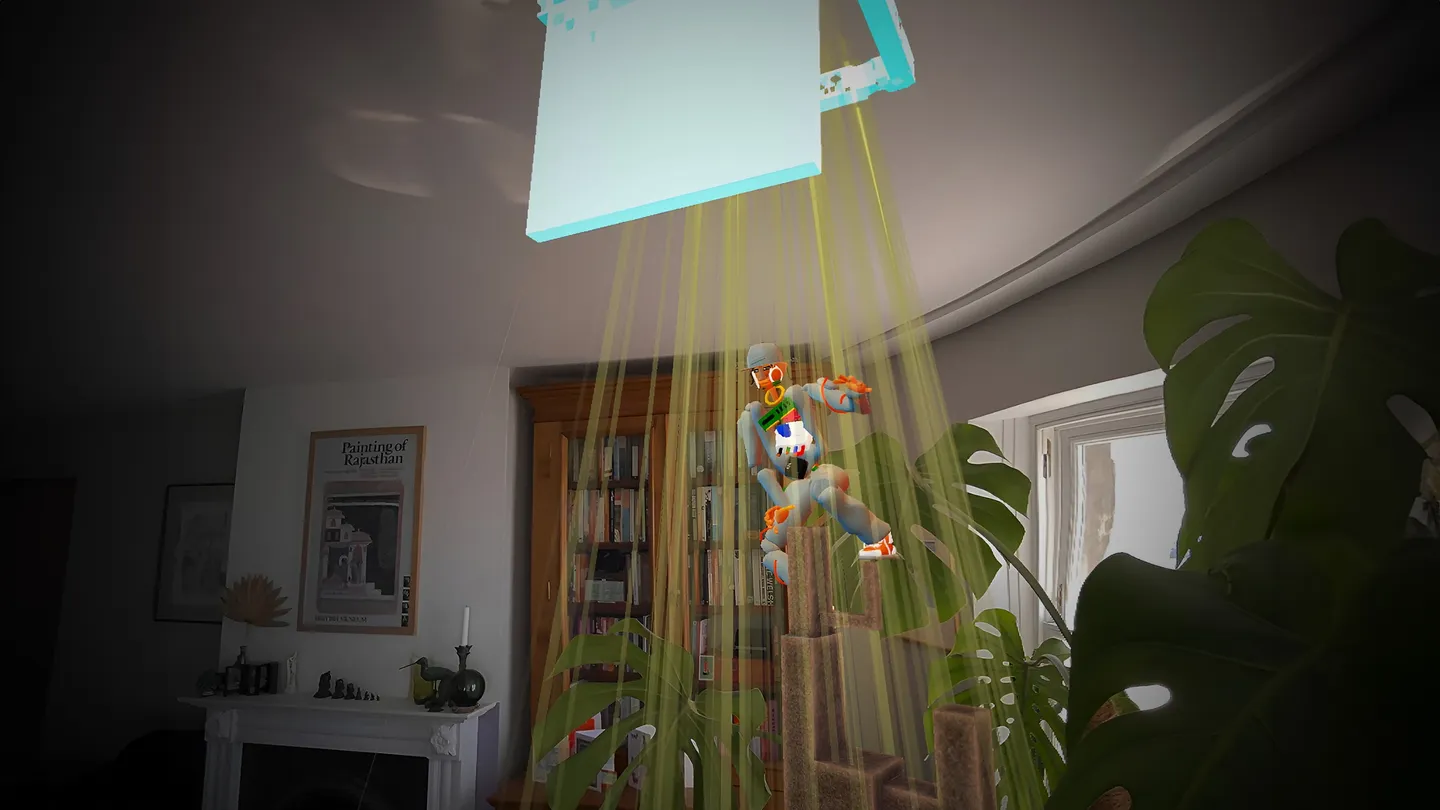

Countless artists, across every medium, have attempted to externalise the mind’s eye, transforming thoughts and feelings into sensory experiences. That process takes on particular nuances and complications when the “eye” in question is affected by mental illness or neurological difference; the art must find ways to represent non-normative experiences that challenge our understanding of reality, often in uncomfortable ways.
That big and juicy “r” word—reality—is part of the title of this innovative, 40-ish-minute mixed reality experience from 2024 that explores the lives of people at the extreme end of the ADHD spectrum. Impulse: Playing with Reality is, in effect, a companion piece to another impressive production about mental illness—2021’s Goliath: Playing with Reality. Both are narrated by Tilda Swinton, who described the latter as ideal “for anybody inclined to question the powerfully boundary-less capacities of VR to inspire and encourage empathy, inclusion, fellowship and transformation.”
Developer: Anagram
Release date: September 12, 2024
Available on: Quest headsets
Experienced on: Meta Quest 3
Those words (a little hyperbolic, but, I think, coming from a good place) could just as easily apply to Impulse. Directors Barry Gene Murphy and May Abdalla draw on testimonies from four people—Omar, Errol, Leanne and Tara—whose experiences of extreme ADHD tilt them towards extreme kinds of risk-taking. This is unpacked most vividly in my favourite section, which arrives about halfway through and explores—in Swinton’s words—how each of them was “driven to the edge.”
“The edge” of course is metaphorical, but Murphy and Abdalla literalise it in a series of striking, diorama-like spaces, styled with a video game aesthetic, that appear in the room around us. In one, Errol, rendered the size of a figurine, scales tall buildings and prowls along their ledges, recalling how he “got off on people being scared…that I was going to fall.” In another, a miniature carpark opens up beneath our feet—in my case, under the floorboards of my lounge room—as Omar smashes the cars below for, as he puts it, “no reason.”
It’s scenes like this that make you think: damn, the world we inhabit is a strange, complicated and volatile place. Saying we’re all on different wavelengths is certainly true but barely begins to cover it. These dioramas—which look dazzling in the present era, when narrative-driven mixed reality productions remain rare—could’ve sustained the entire experience. But Impulse begins very differently, with an extended and very surreal game staged in a virtually scaffolded version of our own space. We form a slinky-like object with our hands (very trippy, and fun to play around with) and match objects by vacuuming them from one zone and spitting them into another.
It’s a little difficult to describe, but it’s well staged, growing more demanding as it builds towards a particular message: that you cannot win when the game itself is stacked against you. In mental health terms, this speaks to how it’s impossible to see reality clearly if the building blocks of perception are broken or fundamentally warped.
Then again, can anybody, at any moment, ever see things “clearly,” or as they truly are? Is reality ever fixed, or is it always in flux—a shapeshifting series of contrasting perspectives? Questions like these will no doubt continue to intrigue, and confound, artists and intellectuals until the end of time.