
ArtsQuest VR review: rediscovering the quiet thrill of virtual paintings

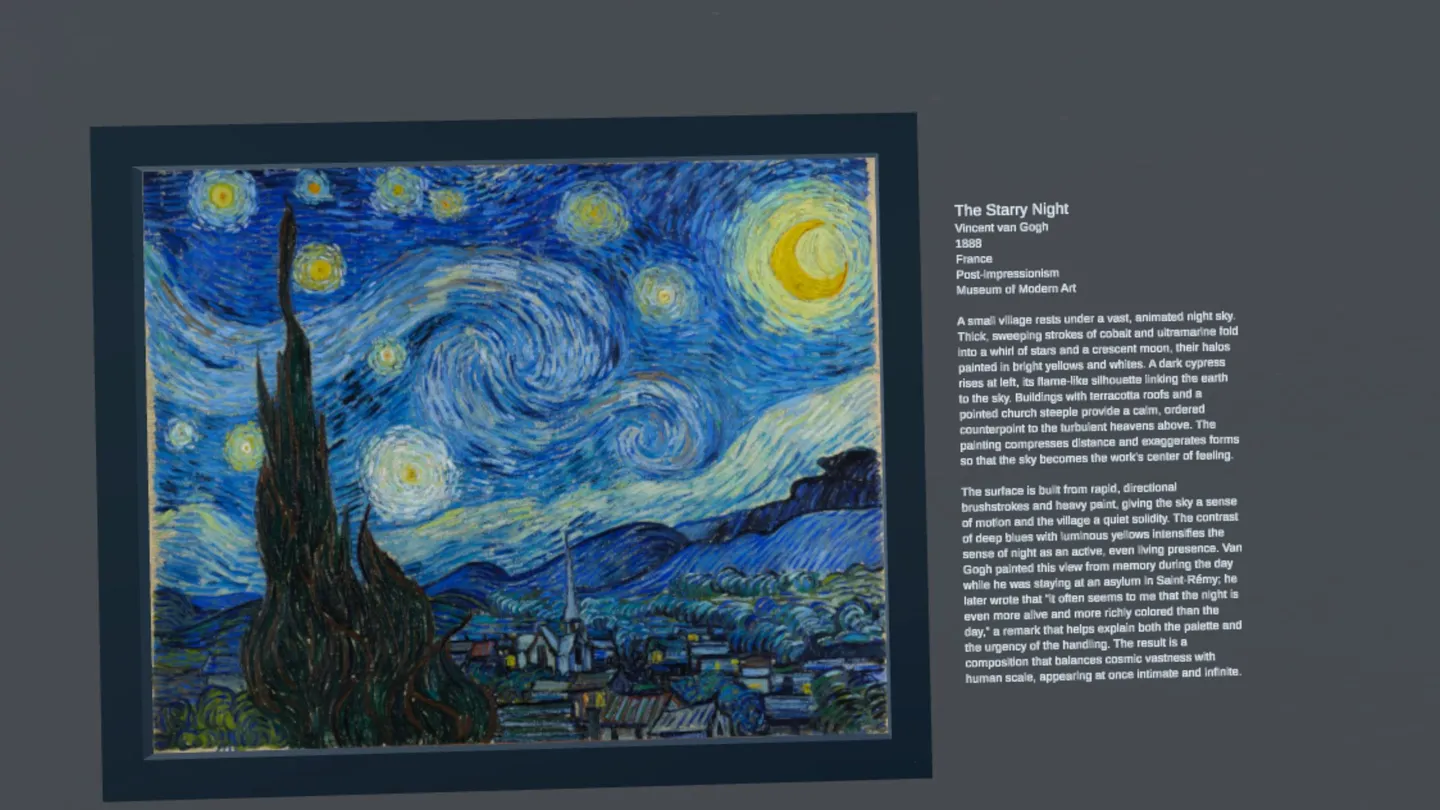

Perhaps it sounds a little hyperbolic to describe ArtsQuest VR as an experience that reminded me of the simple pleasures of standing before a painting. And maybe that’s weird, given the galleries themselves are virtual. But it would be remiss of me not to mention this, because, honestly, this was the feeling it produced. Several elements coalesced to make this happen, including the absence of time: in this world, nothing moves forward; there’s no sands slipping through the hourglass. It feels like a temporal vacuum: a space in which artworks, including some of the world’s most revered paintings, can be contemplated with the kind of patience and stillness that no visit to The Louvre or the MoMa could accommodate.
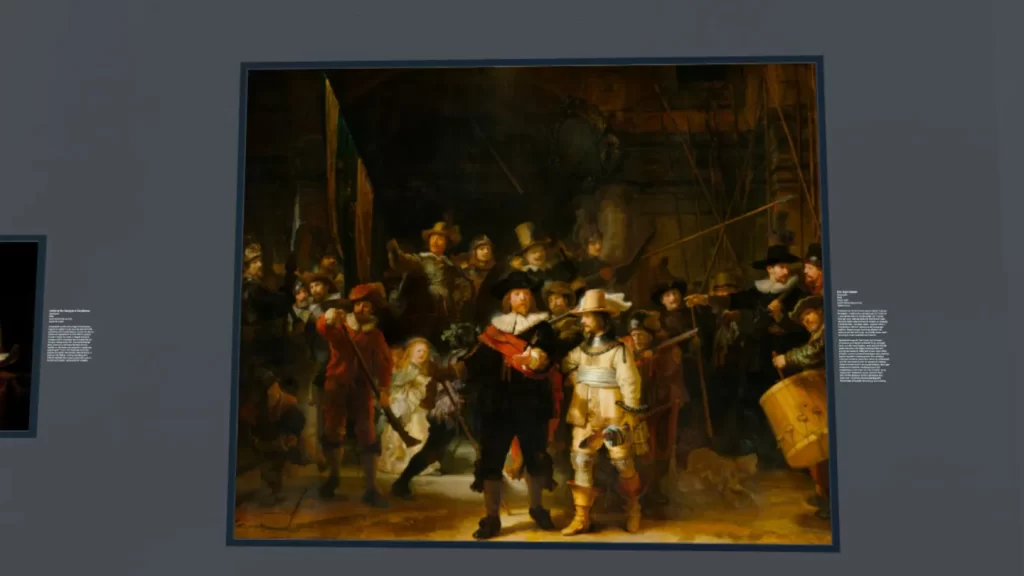
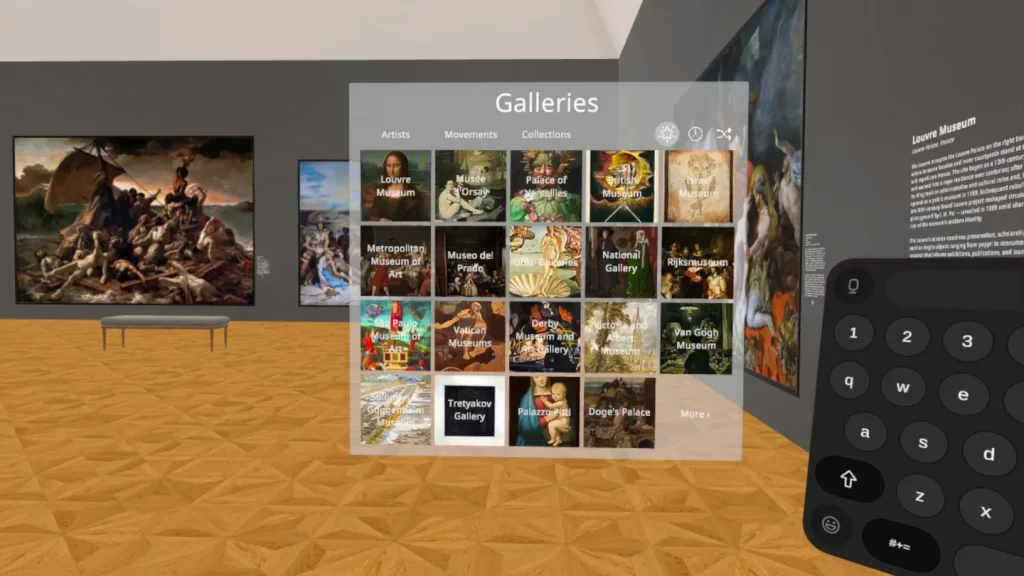
In terms of environmental design, ArtsQuest VR is simple: a series of galleries devoted to different artists, undecorated except for paintings and accompanying curatorial notes. The walls are grey and the floors polished brown timberboards, though these elements can be customised (as can the frames surrounding the pictures). There are thousands of artists featured, including the big-hitters—from Leonardo da Vinci to Vincent van Gogh, Edvard Munch, Claude Monet, Rembrandt, and countless others. The spaces aren’t just separated into artists, but also collections, meaning you can see the same artworks featured in, say, the Louvre or the Rijksmuseum.
Developer: carademono
Release date: August 25, 2025
Available on: Quest 2, Quest 3, Quest Pro
Experienced on: Meta Quest 3
When I contemplate ArtsQuest, my mind returns to that aforementioned sensation: of encountering familiar works in previously unexperienced ways. In addition to the absence of time, other elements contribute to this feeling, including the absence of crowds. That’s one pretty significant factor: here there’s no working your way through a packed room; no jostling for a prime position; no trying to tune out the chit-chat around you; no feeling guilty about obscuring somebody’s view. There’s also the absence of a body: here we exist without arms, legs, or other corporeal reminders of ourselves. This peels back another layer of distraction, encouraging a deeper connection to the works themselves.
For my first gallery, I decided to check out the works of old mate van Gogh. Many of these paintings I’d seen in physical reality, last year, at the Musée d’Orsay in Paris. First I read the wall text, including a famous van Gogh quote: “I dream my painting, and then I paint my dream.” I looked at his 1889 Self Portrait, then made my way onto others, i.e. At Eternity’s Gate and The Night Café. Boy oh boy, was it good to see these works without all those other people around.
I pondered, for the first time, how the swirling colours in these works give an otherwise still tableau motion. Not of time, but of some other movement, or a movement born of some other thing: a swelling in the air; a feeling that everything—even stillness—is constantly in flux. That flux has to come from the artist’s heart and mind: he’s feeling something else, seeing something else, painting his thoughts with motion, his motions with thought. So you can see how my mind wandered, the pared-back nature of the experience encouraging such thoughts, giving them the space to find a new residence, a different perspective, some other frame of reference.
How much or how little time you spend in this app simply depends on how much or how little time you want to spend looking at paintings. The first time I used it, I was there for about an hour, and found it very rewarding. Interestingly, I even appreciated something that first struck me as a bug, soon coming to regard it as a feature. When you approach any painting, it’s initially blurry. Stare at it for a few seconds and the word “loading” appears on the bottom right hand corner of the frame, before the picture, indeed, loads, becoming crisp and clear, the way it should be.
Weirdly, I came to really enjoy those few seconds before the work properly appeared. I looked forward to them. In these moments, it almost felt like I was between worlds…almost like I was in the space between paint and canvas. Come to think of it, given the nature of these moments, maybe time does exist in this world, albeit a very different kind of time: the kind that invites anticipation instead of impatience. In this lovely experience, even the loading screens feel meditative.