
Hubris review: pretty but vacuous

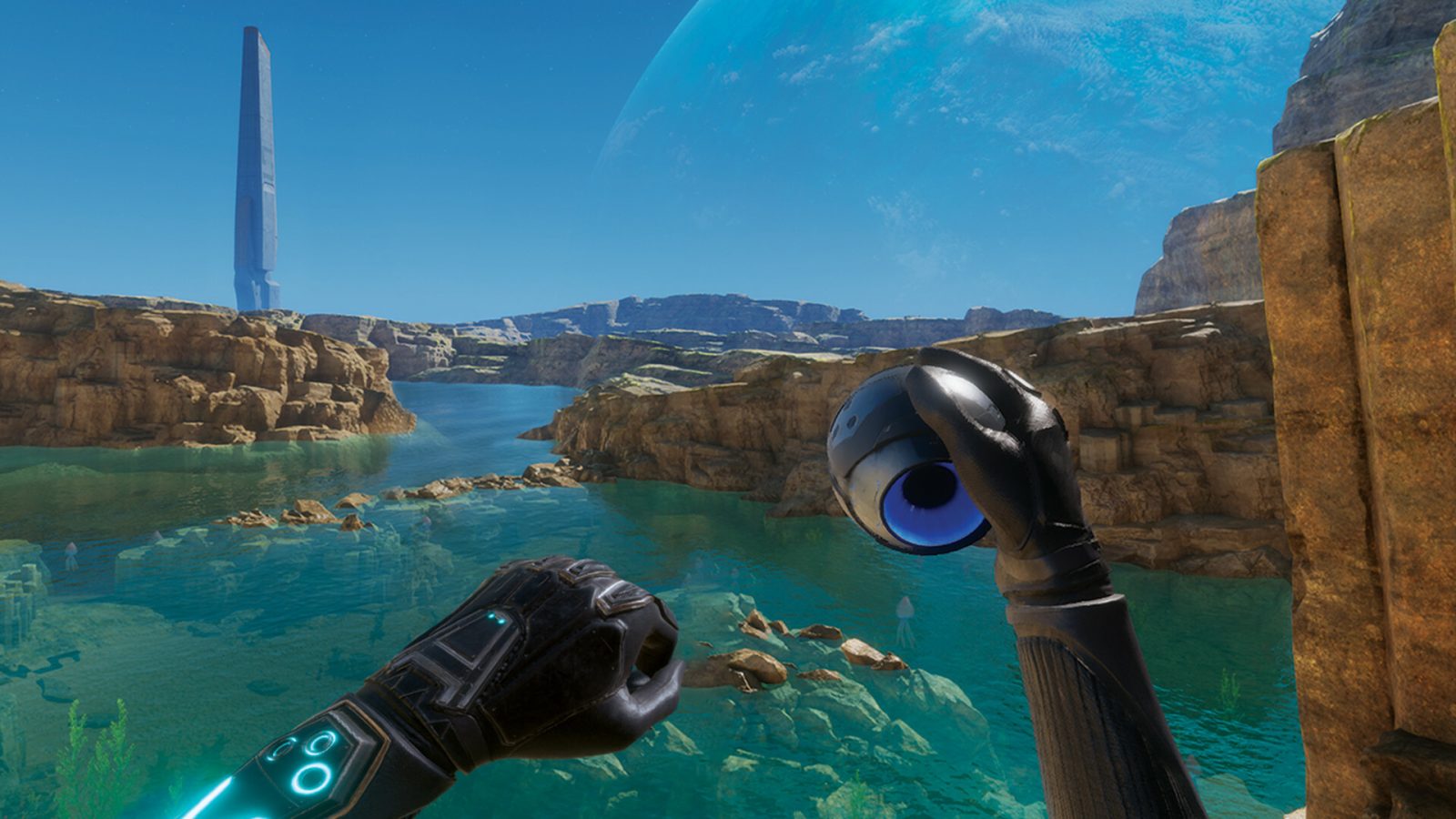

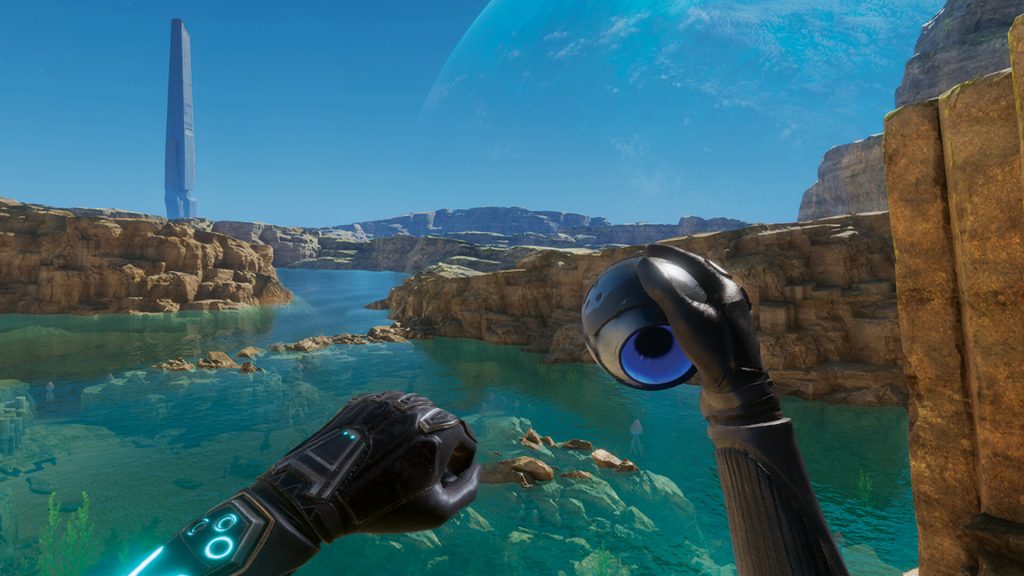
It took me a while to put some words together about Hubris, a first-person shooter originally released on PCVR in December 2022, then on Quest headsets six months later in a graphically scaled down version. It’s important to note this, because the game—which is set on a picturesque alien planet with lagoon-like environments—was received as a very glossy, visually appealing affair, summoning responses along the lines of: “gosh, that looks pretty.”
Those kinds of reactions carry us through its first half hour or so. We play a new recruit in the Orwellian-sounding agency “Order of Objectivity,” sent on a rescue mission to find a missing agent who’s gone AWOL. After a brief intro on a ship—complete with lovely pink and blueish planets observable through the window—we arrive on the aforementioned planet, with its effervescent aqua water and mustard-coloured cliffs. If, or when, space tourism takes off, this is surely the kind of place you’d put on the brochure.
Developer: Cyborn BVBA
Release date: December 8, 2022 (Steam)
Available on: PCVR, Quest headsets
Experienced on: Meta Quest 3 via Meta Quest LInk
The environment looks nice and expansive, like you could spend days or weeks roaming around. But it soon becomes apparent that there’s really only ever one way to go; this isn’t an experience that seriously entertains the illusion of finding your own path. To be fair, many first-person shooters are like that; it’s less of an issue if we feel emotionally and/or narratively absorbed.
Great gameplay would’ve also helped; unfortunately, in Hubris, it’s rote and stock-standard. We take down hostile creatures by zapping them with a small range of weapons, upgradable through an annoyingly slow crafting system. There’s plenty of jumping and climbing, along with some light environmental puzzles, but nothing particularly memorable.
Hubris falls into a VR subgenre I call “after-the-fact drama,” in which the most narratively important occurrences take place before our arrival. vIt’s clear that, in this far-flung location, something went down, something big; the storyline therefore focuses on unpacking mysterious past events rather than staging a compelling here-and-now.
There are echoes of this in the Red Matter VR games, as well as in many other space-set productions filled with empty rooms, the occasional corpse, and computers stocked with conveniently accessible log files. In these experiences, it’s hard not to feel like we’ve come to the party too late. To extend the metaphor: there are cigarette butts and empty glasses everywhere—and yet we’re expected to have a good time, fossicking through the dregs of what came before.
Even graphical prowess as a concept is slippery: what looks impressive today may feel old-hat tomorrow. But engaging narratives with well-drawn characters are evergreen: story matters, writing matters, especially in experiences like Hubris that are very steered and stage-managed. I emerged from the experience with two words front of mind: “pretty” and “vacuous.”