
La Magie Opéra review (Venice Immersive)


Over the years I’ve spent thousands of hours in VR, gobbling down countless mind-bending productions from all corners of the virtual universe. When I think about the worlds I’ve visited, the things I’ve observed, and how I might explain these sometimes very whacked-out experiences to people unfamiliar with the technology, my mind jumps to Roy Batty’s “tears in rain” monologue from Blade Runner: “I’ve seen things you people wouldn’t believe…”
But no matter how liberating the digital realm is, our physical world inevitably brings constraints. Being based in Melbourne, Australia—a city Jerry Seinfeld once described as the “anus of the world”—I sometimes miss out on installation-style pieces that require large, dedicated spaces to literally walk through.
Director:
Jonathan Astruc
Screenplay:
Eric Barbedor, Karen Hunt
Running time: 25 minutes
Experienced at: Venice Immersive 2025
My relative lack of experience in these works made La Magie Opéra feel especially novel. This 25 minute roaming experience featured in this year’s Venice Immersive program takes a wonderfully creative approach to the history of Paris’ Palais Garnier opera house, dreamily folding together time and space, always prioritising the conjuring of magical moments over dry elements like dates and facts.
Director Jonathan Astruc understands that great VR storytelling is about using space to reveal information. La Magie Opéra is a social experience—though I assume it can be undertaken solo—that begins with each participant (I was among a group of five) choosing an avatar, taking on the role of an extra in a Palais Garnier production.
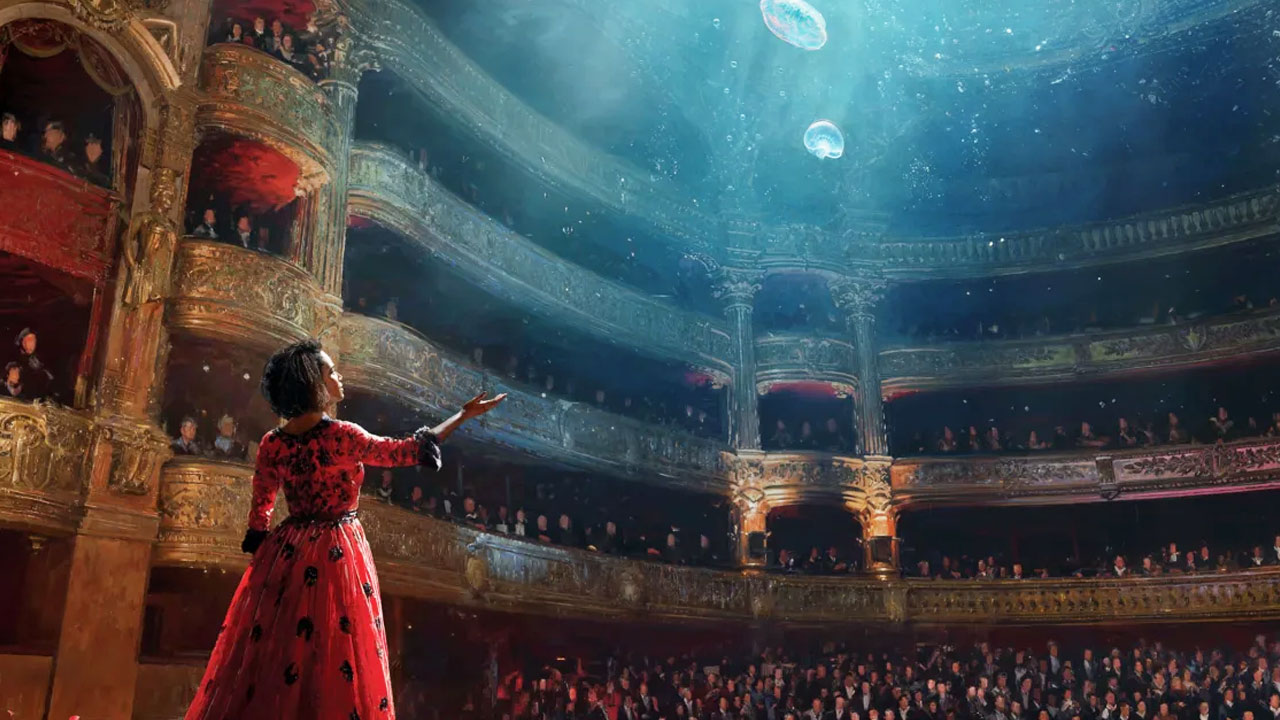
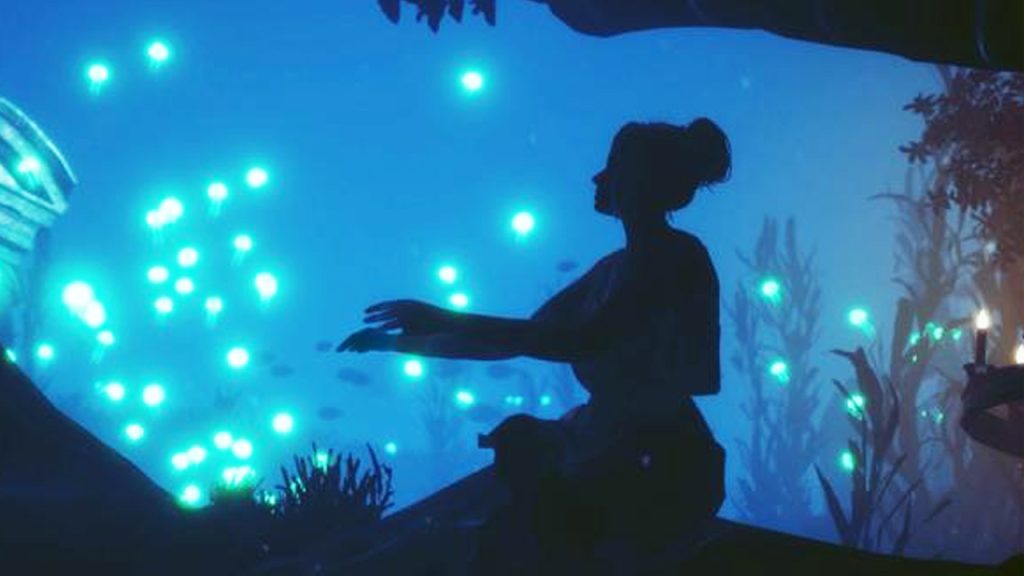
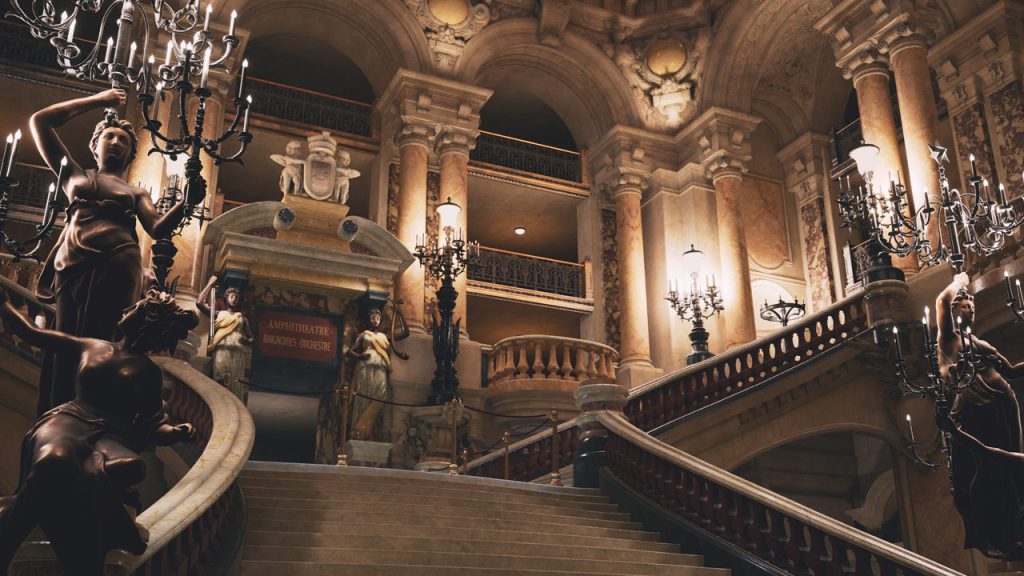
We’re greeted by the protagonist, Céleste, a young curly-haired singer about to make her stage debut, who welcomes us in a virtual rendering of the venue, descending its opulent staircase. We follow her through a series of locations, some rooted in the opera house and others fantastical—a magical garden, an underwater world—which at times homage moments from famous operas. An added subplot involving murder and betrayal among key figures in the theatre gives the piece extra dramatic sizzle.
In roaming experiences like this, part of the trick is to make us feel like we’re travelling substantial distances when in fact we’re literally walking around in circles. Small touches help sell the illusion: in La Magie Opéra, for instance, when an overhanging element appears above us, we instinctively duck, knowing we could walk straight through it but choosing not to—because doing so would be deliberate, immersion-breaking sabotage; the actions of a killjoy.
Although the physical distance travelled is relatively small, it still requires a space considerably larger than most lounge rooms or bedrooms, positioning productions like this in the context of out-of-home geolocated experiences. The difficult challenge of trying to combine a roaming and at home experience was memorably, if imperfectly explored in the innovative 2023 game Tea for God, which uses tight corridors and elevator shafts to bolster the illusion of an expansive physical journey.
La Magie Opéra requires more space, but doesn’t over-extend itself, each environment relatively simple but beautifully textured and detailed. Our role as “extras” only truly comes into play in the final scene—before then we feel more like participants of a walking tour—when we perform alongside Céleste, in a packed-out theatre, a staging of Habanera from Bizet’s Carmen.
When she activates frozen statuettes on the stage, it creates a weirdly magical moment: dressed like our avatars, they spring to life, blending the real and unreal, the choreographed and the spontaneous. Following Céleste’s lead, I stepped to the edge of the stage and bowed, lapping up the applause from my virtual fans.