
Reach review: an epic but rote adventure

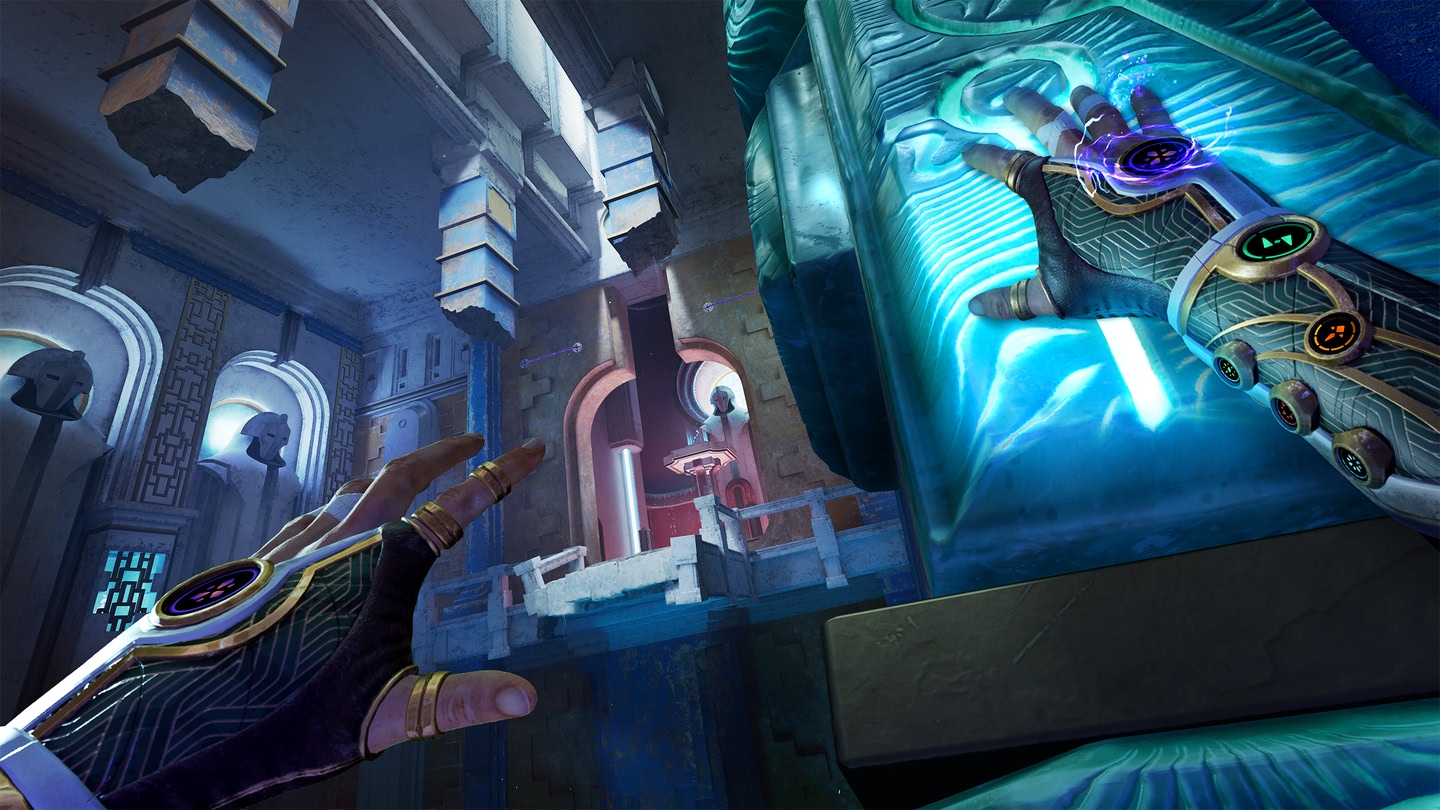

The fantastical world of the action-adventure game Reach feels less like a lived-in universe that existed before we arrived—and will continue after we leave—than a place carefully engineered for our existence. Its environments are eerily empty or near-empty, and its cities are dotted with ramps that conveniently face ledges and platforms. The question “who are they for?” is almost redundant: they’re for the player.
The character we inhabit is Rosa, a Hollywood stunt double at the center of an epic—albeit rather rote—storyline involving an ancient civilization and a surreal subterranean world, accessible only once time itself has stopped.
Developer: nDreams
Release date: October 16, 2025 (Quest 3)
Available on: Quest 3, Steam, PSVR
Experienced on: Meta Quest 3
The more interesting question is: “who else are they for?” For us, these ramps mark a clear passage through the space, inviting us to parkour our way forward—but within the narrative world, they make little sense to anyone else who supposedly lives there. Another problematic design feature—just as contrived as those ramps—is the abundance of doors (particularly in the game’s first 40 minutes or so) that are not merely locked but entirely handleless.
Again, we understand what these mean for us: they clearly signal that the doors cannot be opened and there’s no point trying. But within the wider world, handleless doors are so illogical they become immersion-breaking. Games that engage in this kind of cosmic gaslighting cast the player as a kind of Truman Burbank, their universe built entirely for them, bending according to their whims. It’s existentialism on steroids: we really are the center of this world, the very reason it exists.
To be fair to the developers, it’s bloody hard to create a reasonably lifelike, navigable city—an effort that entails all sorts of creative compromises. Assassin’s Creed Nexus did a much better job creating places that feel busy and thriving, suggesting a real community and a sense that the virtual world continues beyond our role in it. Mentioning that game might raise an eyebrow from the Reach team, given that it’s a AAA title with a much larger staff and budget. But knowing your limitations is key to creative success: better to craft something modest and polished than to overextend into unmanageable territory.
The cruel twist, in relation to that last point, is that Reach does, in fact, scale down—switching its big city spaces for more manageable environments: underground tunnels and large cavernous chambers with activatable elements, such as doors that open upon completing a puzzle. In these spaces, which dominate the game’s eight-ish hour runtime, different problems emerge—primarily a drop in pace and the unfolding of an uninspired storyline involving the aforementioned ancient civilization. It offers plenty of mysterious lore, typically explained through waffle-filled exposition.
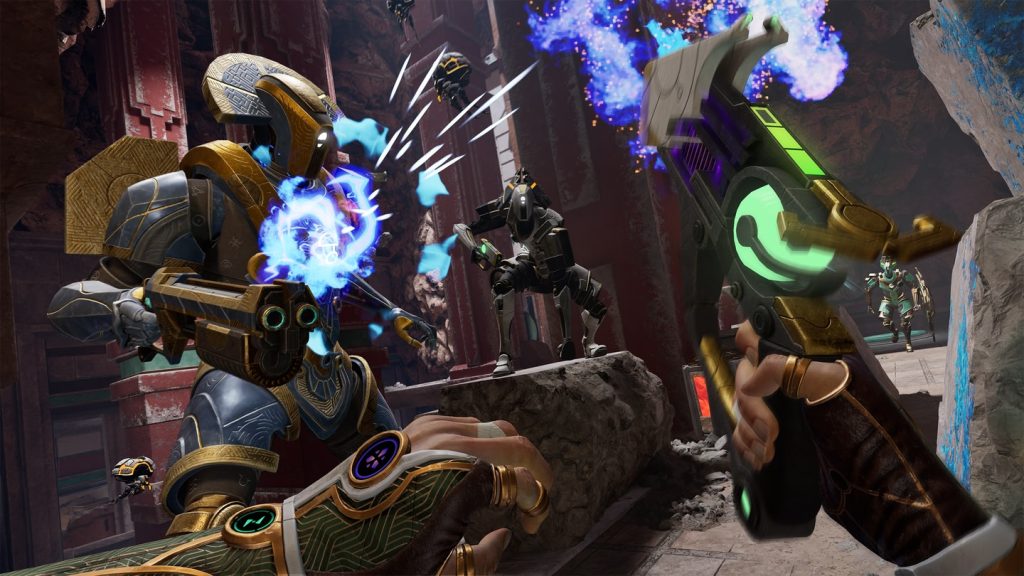
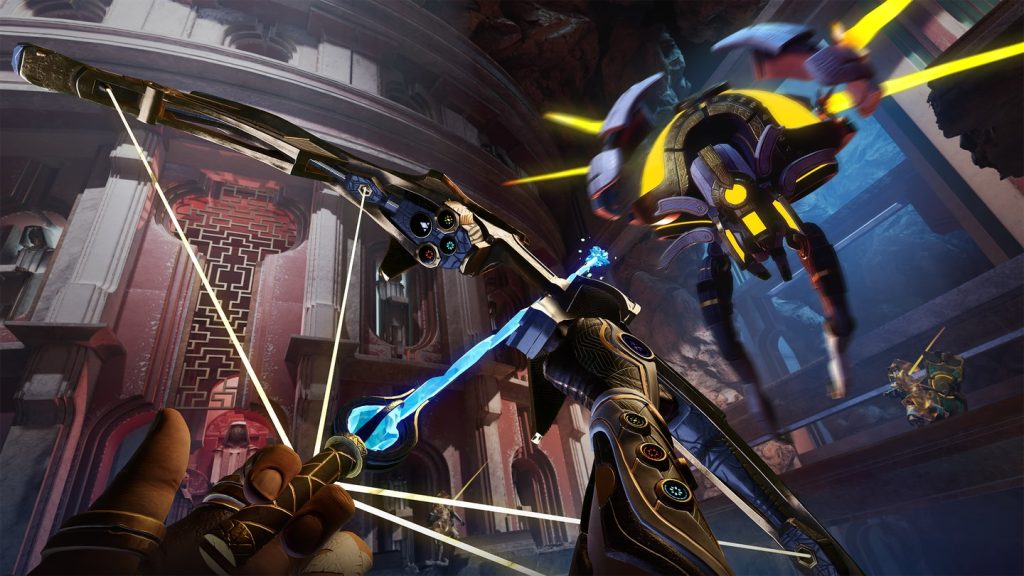
The primary weapons are bows and crossbows, used to take down nondescript, robot-like enemies. So many elements of Reach—perhaps all of them—feel cribbed from FPS and Adventure Games 101, from the weapons to the puzzles to the omnipresent companion who accompanies us remotely on our journey. Many of these complaints could also be leveled at another recent first-person VR game from nDreams, Fracked, which deploys a save-the-world narrative involving a tyrannical mining magnate and aliens draining the planet’s resources. But that game feels lovingly textured and tightly paced, opening with a 007-esque escape scene and sustaining a zippy momentum throughout.
By contrast, Reach feels very flat and “so what?” The game mechanics are pretty good, but they can’t compensate for an experience that rarely gets the blood pumping and brings nothing new to the table. After a little more than four hours of playing I’d had enough; this world may have been built for me, but it didn’t feel worth staying in.