
Westworld Awakening review: mind-bending stealth horror



The idea of virtual characters breaking free of the imaginary world and spilling over into the real one is a trippy concept—relevant anew in this time of rapidly accelerating VR, MR and AI technologies. It was core to the first season of the Westworld TV series, in which a robot named Dolores (Evan Rachel Wood) became sentient and decided she was sick of participating in a theme park for rich people living out wild fantasies. In the age of spatial computing and the aforementioned technologies, the writers stuck with actual, physical robots, not dissimilar to those in the original 1973 film, which struck me as a little passé and regressive.
While also re-deploying these robots, the excellent and under-appreciated stealth horror game Westworld Awakening reinvigorates the premise, presenting a particularly interesting take on the “simulation inside a simulation” scenario. Not with regards to nesting realities per se but how aesthetic choices made in the outer world can inform the fabric of the inner. If that sounds confusing, let me unpack the game’s engrossing opening scenes to demonstrate the point.
Developer: Survios
Release date: August 21, 2019
Available on: Steam VR
Experienced on: Oculus Rift via Oculus Link
Throughout Awakening we play as Kate, a sentient droid initially unaware that she’s a robot and that the environments around her are simulations. It opens in a thoroughly cinematic location: outside a creaky old mansion where a storm is brewing. We hear the voice of a female engineer who manipulates this world and speaks from a higher reality, like Christof in The Truman Show. She describes the house as “your great uncle Bill Moore’s manor” and instructs us to “go inside and meet his lawyer, before the storm gets any worse.”
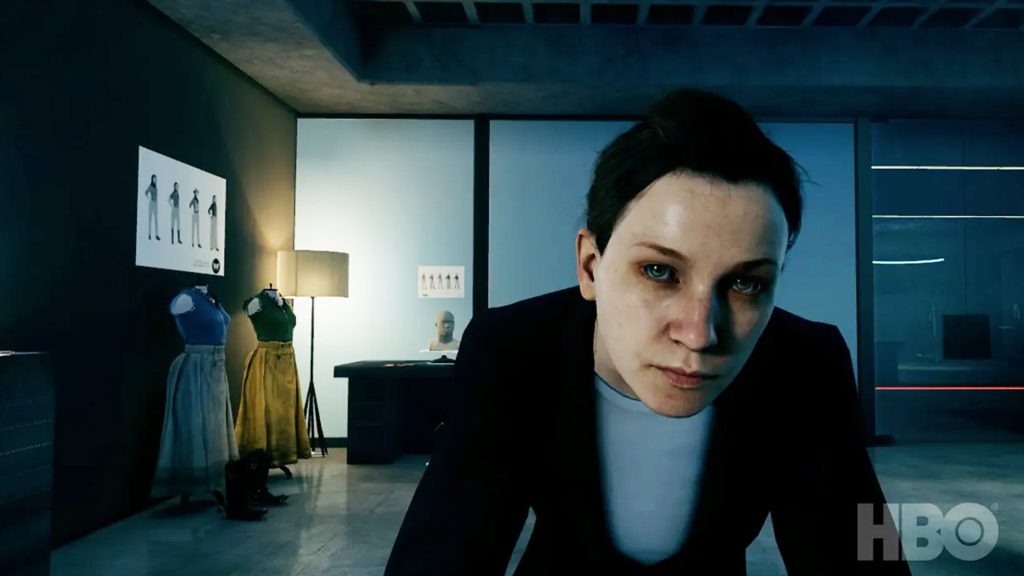
When we enter we do not encounter a lawyer—or anybody with good news. We find a dead body, blood smeared across the walls, and a very scary dude dressed in grubby clothes, Hank, who kills us with a knife. In the next immersion we’re relocated to a corporate office, where two people discuss the scenario we just experienced. One criticises the murder weapon for being “horror schlock,” drawing the following riposte: “hell yeah it’s horror schlock! He’s a villain, it’s classic.” These people are storytelling engineers tweaking the scenario we just experienced, and will experience again. We return to the creaky mansion twice more, ultimately discovering that we’re not in control of our fate (in other words, we’re gruesomely murdered).
Set during events depicted in the TV show’s second season, the robots rebel against their overlords and create all kinds of grisly mayhem. Most of Awakening takes place inside the real-world facility, where a confused Kate struggles to come to terms with her new reality, while confronting an immediate threat: old mate Hank. Knowing no better, he follows his “murderous hick” script, trapped by his own programming. His sole purpose, his raison d’etre, is to find and kill us. Ergo: there’s lots of hiding and crawling. He’s a psycho killer, qu’est-ce c’est; we better run, run, run, run, run, run, run away.
On the subject of running, it’d be remiss of me not to mention Awakening’s impressive navigation system. You move around by looking in a particular direction and swinging your arms, while holding the trigger buttons. It doesn’t take long to get accustomed to this— just a few minutes—and it works very well, feeling pretty naturalistic (a similar style of navigation was deployed several years later in Horizon: Call of the Mountain). Sometimes I walked on the spot, moving my legs as well as arms, to add to the immersivity.
Like most stealth games, Awakening is repetitive; essentially one great big round of hide and seek. But just as the story seems to be slowing, or about to stall, the writers show a knack for picking things up again, kicking along the master narrative, often by inserting an unexpected encounter. The action is ensconced in a thick layer of dread, with plenty of moments that are genuinely scary. You really, really don’t want to get attacked by Hank; on several occasions I looked the other way while that cruel bastard carved me up. This game blew me away when I first played it in 2019; I’m writing about it now, in the hope that it will belatedly receive the recognition it deserves.
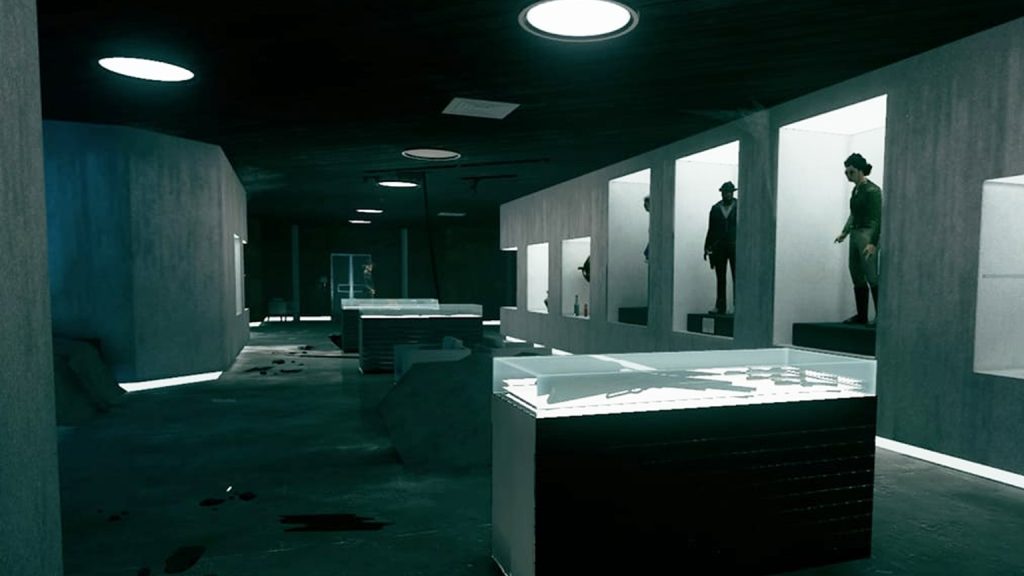
The story remains captivating throughout five-ish hours of gameplay, towards the end returning to some of the reality-bending ideas from that mansion-set prologue. There’s a terrifically surreal location (minor spoilers to follow for the rest of this paragraph) very late in the runtime, which is like a museum of simulations: a series of small sound stages positioned in front of a pitch black backdrop. Each stage depicts scenarios featuring replicas of Kate and her cowboy husband, illustrating elements of their manufactured lovers-on-the-run narrative. It’s trippy—and a solid way to conclude an always-thoughtful production that’s also pretty bloody scary.