
Out of the Ashes review: a striking portrait of homes and memories (Venice Immersive)

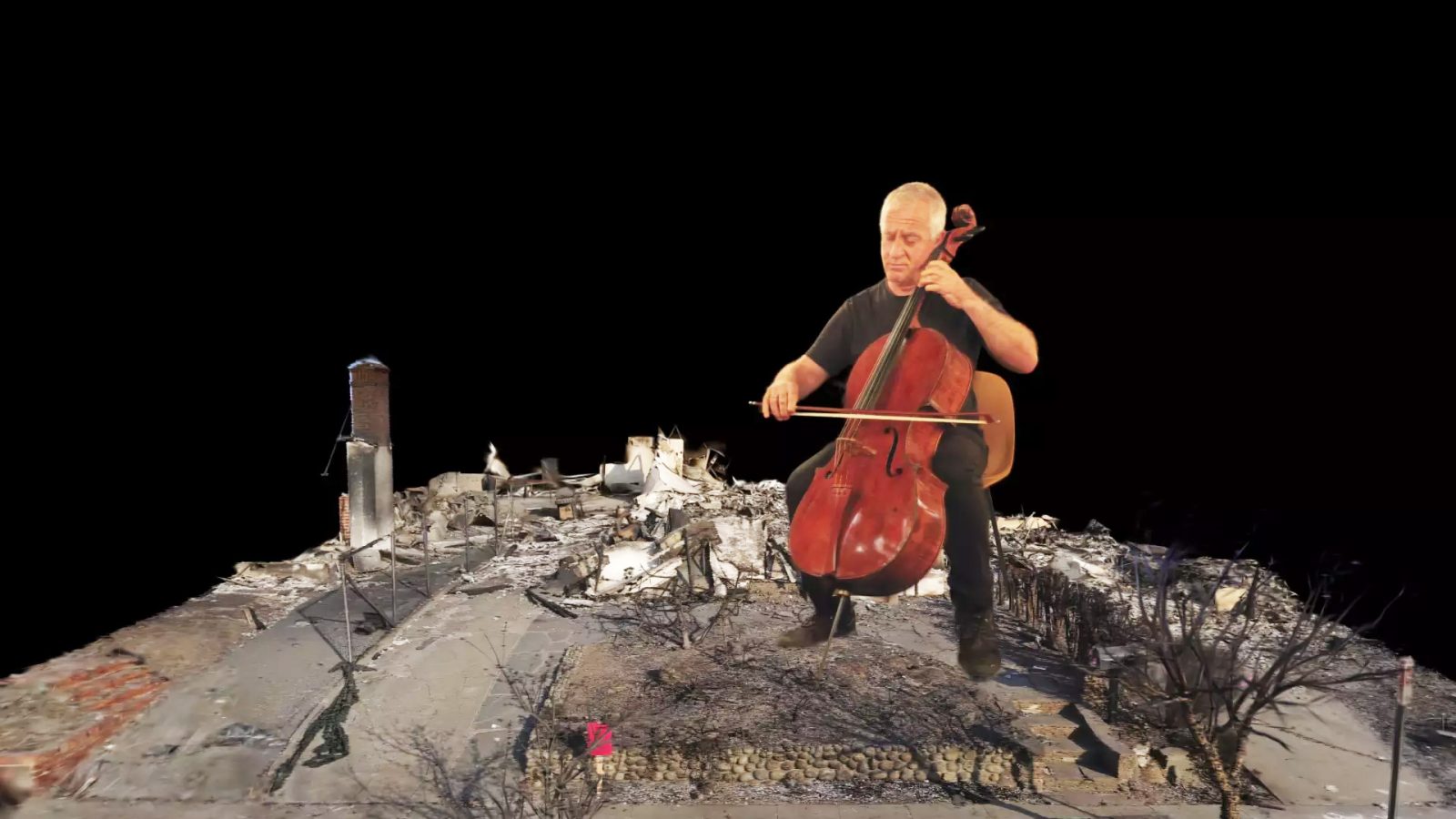

It’s a great truism, in real life as well as immersive art forms, that stories belong to places, and places tell stories. What if those places are homes, and those homes have been destroyed? That’s the scenario in Out of the Ashes, a strikingly textured documentary experience co-directed by Rory Mitchell and Nonny de la Peña. The latter has been dubbed “the godmother of VR”, in recognition of her highly influential oeuvre – too extensive to recap here, dating back to VR’s equivalent of the stone ages.
Out of the Ashes explores the stories of people who lost their homes during the LA fires of 2025, which swept across 40,000 acres. It uses spatial rendering techniques to tremendous effect, not just to make us feel present, to make us feel there, but to evoke a powerful sense of community and belonging: of people who are apart but together, united in their loss.
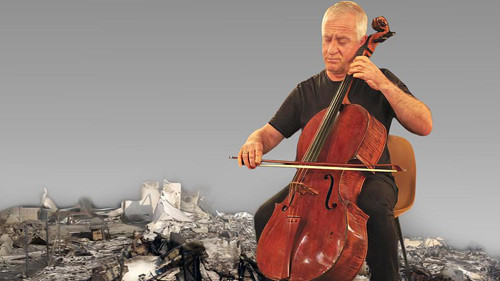
Directors: Rory Mitchell, Nonny Peña
Screenplay:
Rory Mitchell, Nonny de la Peña
Running time: 26 minutes
It begins by establishing a spatial and locational context, presenting a large map of Los Angles around us, displayed at about our waist level. A narrator, combined with this topographical overlay, tells us where the fires started – we see them too, bits of the tableau lighting up – and the conditions that enabled them to spread.
After that, we choose between one of two neighbourhoods to enter, then, once placed in an omniscient position above the land, we choose between people, our selection activating chapters devoted to each subject. Mitchell and Peña could’ve simply rolled out one chapter after another, but this feels like a good way to do it, allowing a degree of decision-making without deploying interactive elements that feel tacked on and gimmicky.
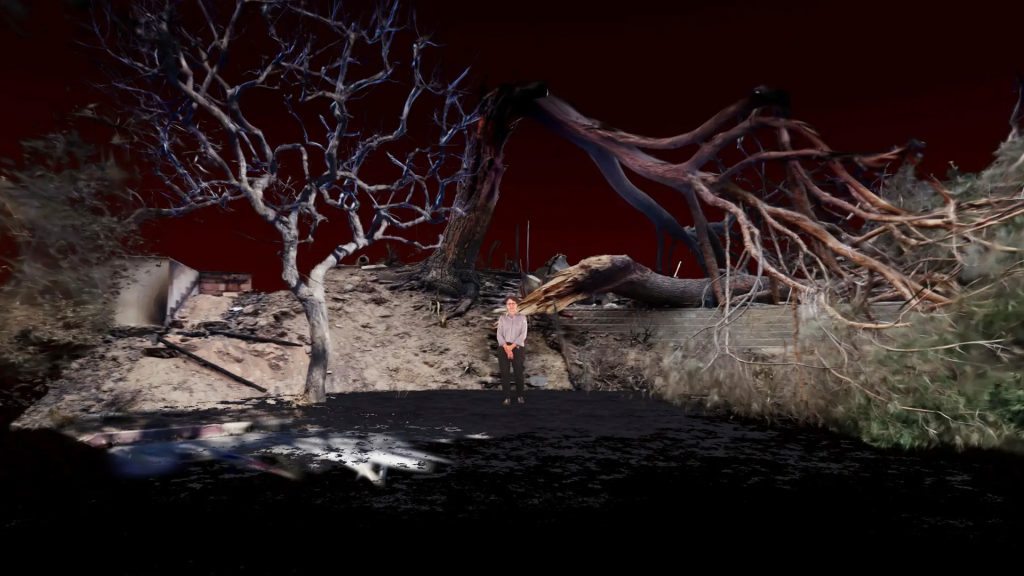
These visually striking segments combine long, godly POVs of particular houses – or, make that, homes – then journeys inside them. The residents tell us their stories: information about their families, their daily lives, and the catastrophic events that changed everything. It looks hugely impressive, in a way that few documentary experiences – or VR experiences full stop – pull off. It very strikingly combines video footage of its subjects with Gaussian splats of their homes – Gaussian splats”, in layman’s terms, being ways of turning real places and objects into fully spatial environments and elements.
“Photorealistic” is a term sometimes used to describe the striking detail present in experiences like this, though that term is clearly a linguistic left-over from an earlier era, not dissimilar to how early motion pictures were sometimes referred to as “photoplays.” I understand the spirit of the term, photorealistic, but the visual elements in Out of the Ashes sure ain’t photos. They’re something much more vivid and tangible than flat, printed representations.
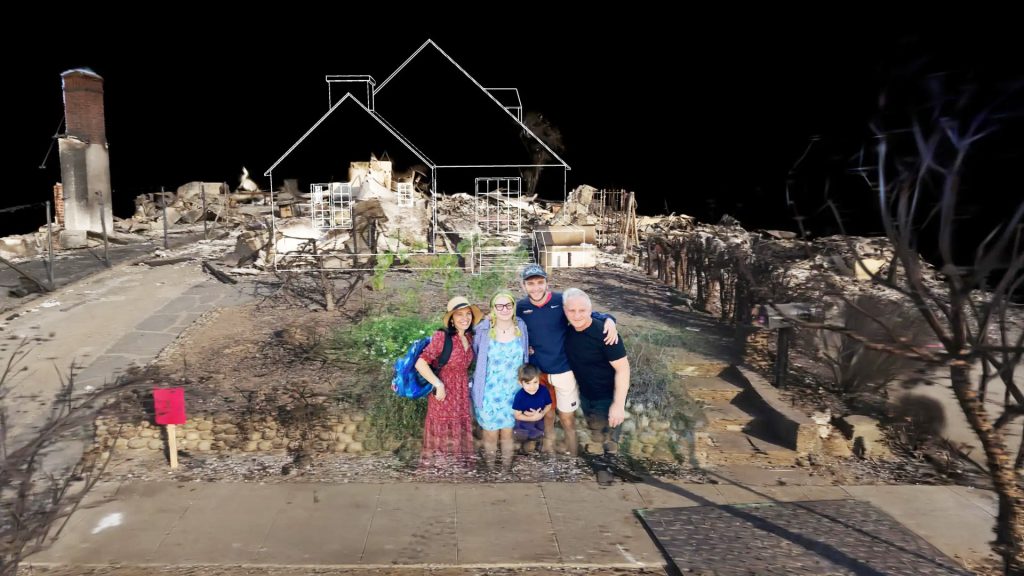
The way objects are integrated in narrative terms reminded me of a lyric from Bob Dylan’s song High Water: “The things you have the hardest time parting with are the things you need the least” (I made the same observation after experiencing The World Came Flooding In, which is centred around flood survivors and reflects on the value of possessions, also rendering objects as vessels for memory). One interviewee recounts how, with limited time and the need to decide quickly, she chose to save photographs of her father; at another point, we meet two women who collect Christmas decorations and redistribute them throughout the community.
When handling blurry elements, or elements with less graphical definition, Mitchell and Peña turn this into an advantage, transforming limitations into aesthetic features. Scratchier elements reflect the themes of the experience, and the reflections of its subjects: they have a ravaged quality; a feeling of being exposed to the elements – and exposed to time itself. This is great design and suits the experience beautifully. I could’ve happily spent hours inside it – visiting more homes, meeting more people, absorbing their stories.