The Symbol of Paris review – not your average VR walking tour

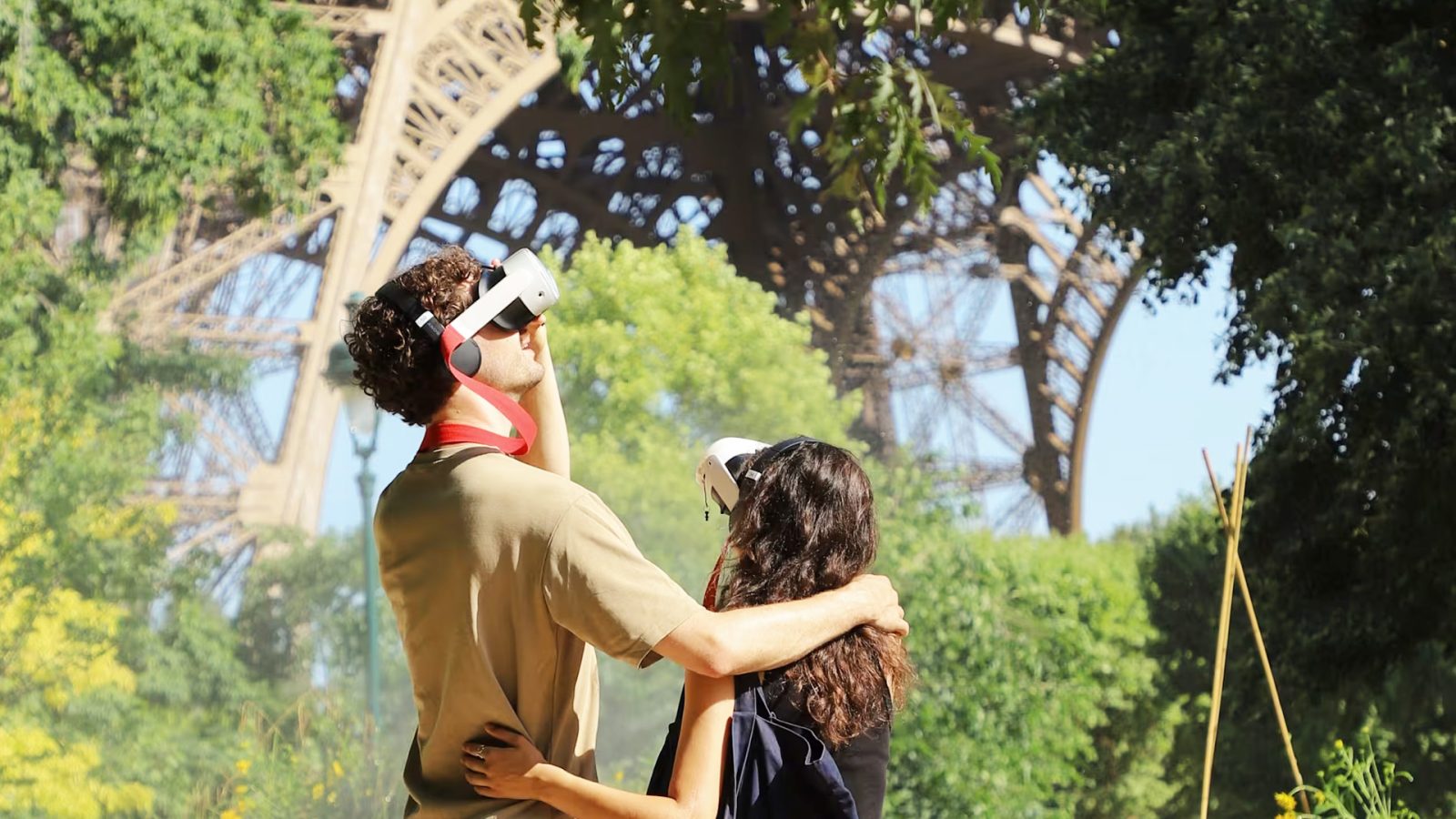

I’m no stranger to virtual reality walking tours – having traversed the likes of ye oldey Amsterdam, the Grand Palais, and phosphorescent far-flung spectacles in the cosmos. Each of these experiences is predicated on using the VR medium to recreate spaces rendered inaccessible through distance or time. The Symbol of Paris – which unpacks the colourful history of the Eiffel Tower, that majestic, modernist, wrought iron incarnation of French innovation – is rather different.
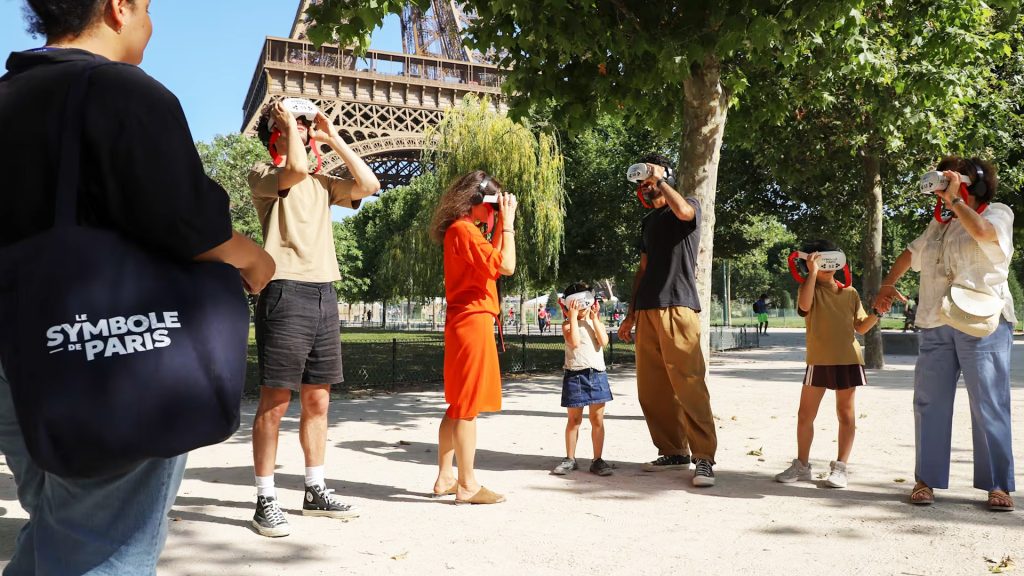
The experience takes place outside, at the Champ de Mars, a huge park on the southeastern side of the Eiffel Tower, which, like many tourist hotspots in Paris, has a rich and interesting history, of which participants will get a taste. The group follows a real-life guide through various spots around the Iron Lady, each stop-off triggering a short and well-produced 360 video. It begins at the office of the tour provider, Timescope, where participants are given their VR headset – or “time travelling device,” as it’s playfully referred to.
Produced by: Timescope
Running time: 60 minutes
Languages: English, French, Spanish
I saw an ad for The Symbol of Paris while holidaying in Europe and thought: why not? I’m glad I did it: this is a fun way to spend 60 odd minutes, and an interesting case study in VR accessibility, removing many of the barriers encountered by the general public i.e. room-scale requirements, learning curves, and motion sickness. Virtual reality is one of three core elements, the others being continuous audio narration and the presence of the Tower itself.
Each video segment lasts for a few minutes, which feels about right: enough to feel immersed but not fixed in one spot. And not enough for your hands to get too tired: instead of having the headset strapped on, it dangles around our necks, and we bring it to our faces at the appropriate times. Using the device like this makes it feel less like a headset per se than a pair of elaborate super-tech binoculars, capable of transforming space and time.
The interplay between virtual and physical elements is simple but effective: you observe the Tower from a particular vantage point, which is replicated in VR. This clearly signposts the work as the kind best experienced through AR glasses, or lighter weight MR headsets, once the technology reaches the point where this is achievable (for now, it’s a pleasing interim solution). Future iterations will also certainly not have a human – in my case a friendly, bilingual Frenchman – lugging around a cart containing servers that make the experience technically possible. There’s something wonderfully, chaotically French about all this innovation requiring a bloke trundling around a trolley full of hardware.
Expect lots of fun facts. Gustave Eiffel’s winning design, for instance, was so radically bold that Alexander Dumas and Charles Garnier joined dozens of artists and writers in signing an open letter, published in the popular newspaper Le Temps, condemning the proposed tower as “useless and monstrous.” Later in the experience, we learn that Adolf Hitler, after successfully invading Paris, wanted to photograph himself at the top of the tower – but some clever, forward-thinking Frenchmen sabotaged the elevator before he arrived.
The Symbol of Paris is hardly a game-changing affair for VR – rather, a conceptually simple, well-balanced experience, delivered thoughtfully and passionately. That, also, is wonderfully French.