
Amsterdam 1652: The Hands of the City review (Venice Immersive)

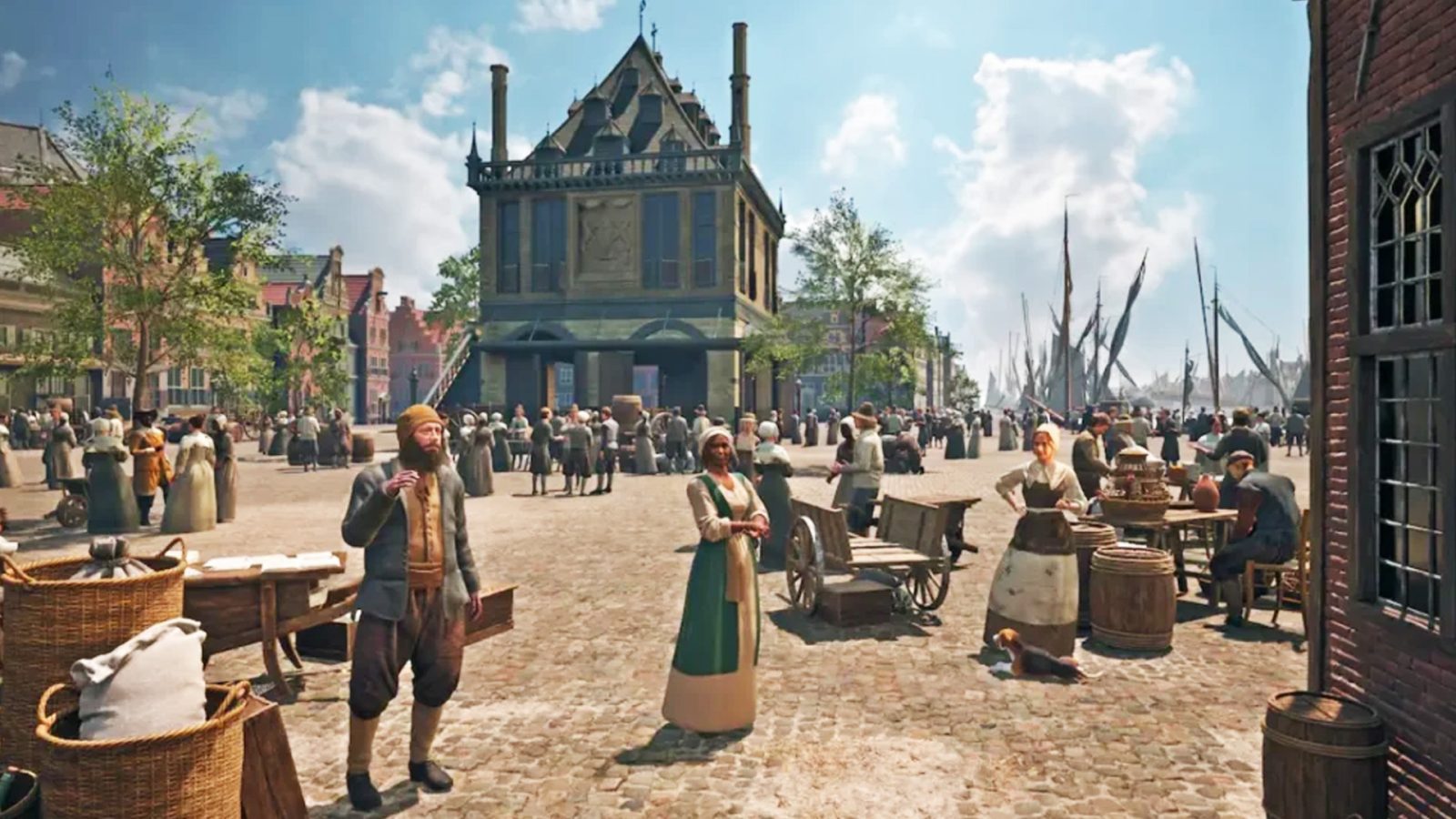

The creation of genres is a significant part of the development of emerging artforms – establishing audience expectations, shared vocabulary, and critical context. The free-roam VR production Amsterdam 1652: The Hands of the City, which I experienced at Venice Immersive with two other people, belongs to the genre of virtual reality walking tours. These are invariably based in interesting locations; I’m yet to experience the pleasures of meandering through an empty virtual carpark. In this case, the setting is ye olde Amsterdam; no prizes for guessing what year we step back into.
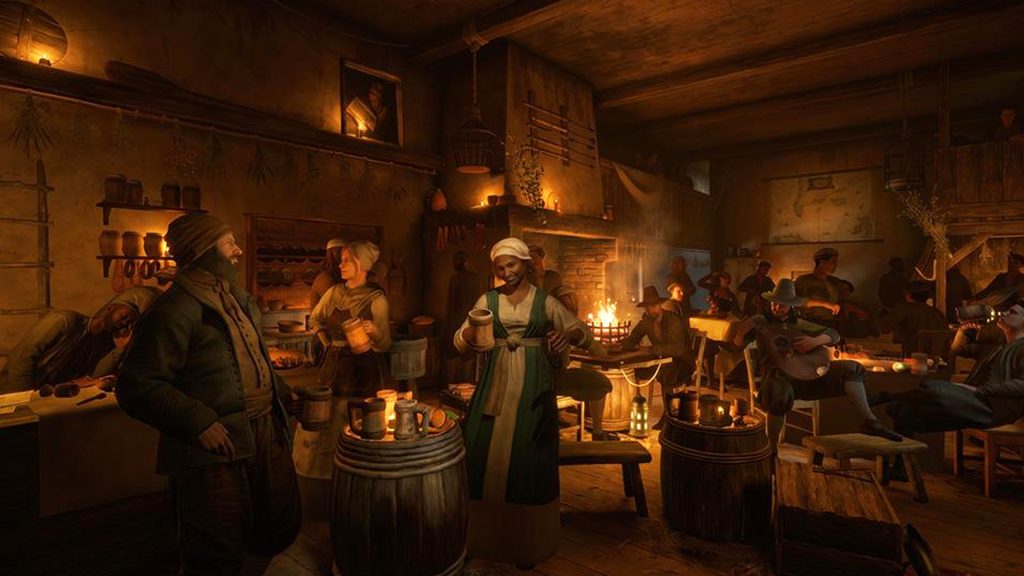
Our first task is to choose a character to embody. I selected a woman in a large frilly dress, which I came to kind of regret, because that dress billowed out in front of me, obscuring some of the visual space. Once the experience proper begins, we visit various settings, including a wharf and a printing press, and encounter several locals who regale us with stories, painting an impression of their day-to-day lives and dropping in historically relevant information.
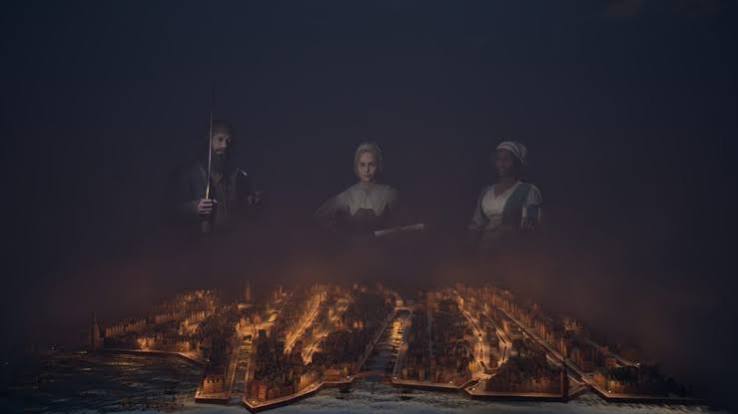
Directors: Nienke Huitenga-Broeren, Vincent Slangen
Screenplay:
Nienke Huitenga Broeren
Running time: 37 minutes
The walking tour genre – which includes the space-themed Smithsonian Starstruck and the Palais Garnier-set La Magie Opéra – prioritises aesthetic realism, predicated on providing a credible impression of what life would be like within a specific locational and, in this case, historical context. This creates a rod for the creators’ backs, participants inevitably comparing the reality they’ve conjured to their lived experience, rather than being receptive to the new realities and aesthetic possibilities therein. Engaging in experiences like Amsterdam 1652 therefore requires a different kind of suspension of disbelief – less to do with story concepts than graphical and interactive information.
The latter was an issue for me, with object interaction that felt clunky, reducing or even breaking my sense of immersion. One scene, for instance, takes place in a printing press – printing being highly significant to Amsterdam’s history, particularly during the Dutch Golden Age. When I was instructed to help out (no fair, free labour!) I struggled to pick up a large mallet-like apparatus, which then flew out of my hand and magically landed in its intended position. Why include this moment in the first place?
At another point, we’re asked to assist in putting out a burning building – raging fire always a reliable visible pick-me-up – by grabbing buckets of water and placing them on a cart. These sorts of “clock is ticking” moments heighten dramatic intensity, and make sense as narrative devices. But it’s unwise to add such immediacy to interactive moments, unless the interactive elements are very polished – as they often are in games, where they most commonly occur.
That’s not the case here. The tracking was a little off and the device interaction fidgety. At one point I held two buckets that wouldn’t come out of my hands for about 10 seconds, during which I flicked my hands vigorously, trying to detach these apparently glued-on objects. This created a frustrating friction: the story is telling us to hurry up because time is of the essence, but the experience isn’t allowing us to do things quickly and efficiently, making it impossible to meet narrative expectations.
Still, the set pieces are enjoyable, and the experience does a pretty good job of evoking a sense of community, as well as the feeling that Amsterdam in 1652 would have been a very vibrant, buzzy place. For those new to the walking-tour genre, it could be a blast.