
The Pigeon Ring review: exquisitely poignant family drama (Venice Immersive)

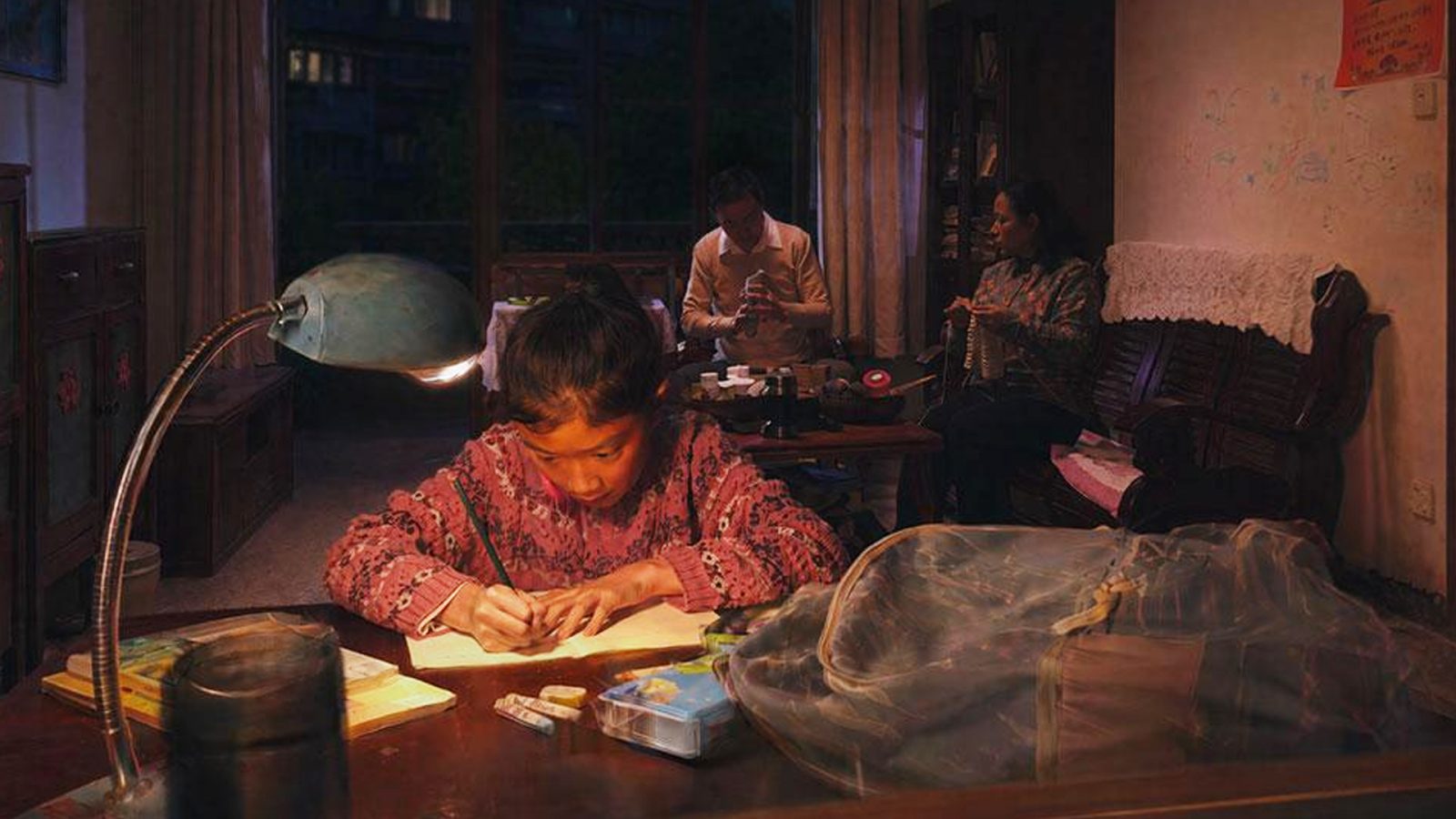

The protagonist of this exquisitely made, narrative-driven experience, based almost entirely in the living room of a decrepit, now-uninhabited family home, is an old man obsessed with pigeons. He’s spent much of his life nurturing and racing them, and his deep desire to see them prevail on the competitive circuit – a substantial industry in China – gives his obsession a Moby Dickian twang. The pigeons are his white whale, representing the desire to attain something tantalisingly out of reach, something perhaps unattainable.
From this closed setting, directors Yuqi Zhang and Shixin Tao extrapolate a wide and complex array of emotions, erring towards poignancy and yearning. It explores the old man’s relationships with family members – including his son and granddaughter – and, gradually, his guilt and regrets, eked out with tenderness and a flair for compelling spatial storytelling.
Directors: Yuqi Zhang and Shixin Tao
Screenplay:
Yuqi Zhang
Running time: 35 minutes
Experienced on: Meta Quest 3
The Pigeon Ring deploys scenes from the past that keep us anchored in the space, but opens it up in interesting ways, using window-like surfaces and visual layers to emphasise our role as spectator, observer, eavesdropper. When such panel-like layering is executed as well as this, it’s a fantastic use of the medium: like a well-placed cut in a film, or a perfectly timed stage entrance in theatre, looking through a window-like display into another environmental and narrative realm just feels right.
At one point, we see the protagonist’s family gathered around the table, this scene a kind of living memory: we essentially look through the window into the same room we’re occupying, observing a different point in time. Elsewhere, we look into a television and discover another version of the room behind us, characters gathered around the TV and nattering away. At the risk of sounding cheesy, the point is made, without having it stressed, that this place is not a house, but a home: an intimate setting; a place of sad times, happy times, simple times, emotionally complex times.
In one lovely touch, a scene is observable only through the crack of a door: we see Grandpa hunched over the computer, obsessively following his pigeon races, encouraged by his son to let it go. The door is only partially ajar, Zhang and Tao limiting what we can see and creating an eavesdropping effect. The act of looking is now part of the drama, and the placement of the body – so integral to VR storytelling – is fluidly, almost invisibly directed.
Deep into the experience, there are elements of magical realism, involving an impossibly white, luminescent pigeon flying around: a visual motif of a dream spilling into reality. At one point, it appears outside the home as a massive, Zeus-like creature, amplifying the metaphorical potential of these now-mighty creatures, which have perhaps been unfairly slighted – the so-called “flying rats” and “gutter birds” of the sky, forever getting in our way on sidewalks and crapping on monuments.
It becomes clear that the grandfather is grappling with various kinds of guilt, deeply embedded, but nothing is dictated or put in highlighter pen; you can interpret the story as you wish. One thing’s for sure: you will feel it. The emotions of the experience linger long, resonating in ways that are difficult to shake. I doubt I’ll forget it – and I long to see it again.